Chinese
Outdoor Tent FBA Shipping Guide: Cost, Compliance & Requirements
Outdoor tents are considered oversized FBA items requiring special packaging, CPSC flammability compliance (16 CFR 1632/1633), and advance appointment scheduling. Tents are bulky but lightweight – a 40ft container typically holds 2,000-3,500 tents depending on size and packaging. Shipping costs range from $5 to $15 per unit via ocean freight consolidation, excluding duties. CPSC compliance is not optional – tents must meet flammability standards, have permanent labels, and include CPSC eFiling data at entry (effective July 8, 2026). FBA oversized warehouses (SCK4, AZA1, JAX3) require 2-4 week advance appointments.
Tents are one of the trickiest products to ship to Amazon FBA. They are oversized, bulky, and subject to CPSC regulations that catch many sellers off guard. We have seen containers of tents sit at the port for weeks because the manufacturer missed the permanent label requirement. We have seen FBA appointments delayed by 12 days because the warehouse was fully booked during peak season.
At AMERICAN NEW LOGISTICS, we have handled hundreds of tent shipments from China to US FBA warehouses since 2008. This guide covers exactly what you need to ship outdoor tents to Amazon FBA – compliance, packaging, costs, and FBA receiving requirements.
What CPSC Compliance Does an Outdoor Tent Need?
CPSC compliance is the most common reason tent shipments get held at customs. Two standards apply specifically to tents.
16 CFR Part 1632 – Mattress Flammability (for sleeping bags)
This standard applies to sleeping bags, which often ship alongside tents. Sleeping bags must pass a cigarette ignition test and have permanent labels showing compliance.
16 CFR Part 1633 – Mattress/Clothing Flammability (for tents)
Tents must meet specific flammability standards. The key requirements:
- · The fabric must pass a flame spread test
- · Permanent labels must state compliance
- · Testing must be done by a CPSC-accepted lab
Missing any of these requirements triggers a CPSC exam. The exam adds 5-14 days and costs $400-$800 in fees plus demurrage.
What Happens If CPSC Compliance Is Missing?
If your tent fails CPSC inspection, the shipment is held. You have three options: destroy the goods (you lose everything), export them back (expensive), or retrofit them with compliant materials (often impossible). The cost of a CPSC hold on a 40ft container of tents typically runs $5,000-$15,000 in storage, handling, and re-export costs.
We have seen sellers lose $20,000+ because they shipped tents without proper CPSC documentation. This is not a corner you want to cut.
What Labeling Is Required for Outdoor Tents?
CPSC requires permanent labeling on tents. The label must be:
- · Permanently attached (sewn in, not glued or sticker)
- · Written in English
- · Visible to the consumer
- · Includes the manufacturer name, country of origin, and compliance statement
Amazon also requires product labels on each unit: FNSKU (Amazon barcode), manufacturer name, and product ID. This is separate from the CPSC compliance label. Missing either label can trigger a receiving rejection at the FBA warehouse.
How Are Tents Classified for Amazon FBA?
Tents are automatically classified as oversized FBA items because they exceed standard size limits. A typical tent box measures 24"×12"×8" (folded) or 36"×12"×10" – well beyond the 18" maximum for standard items.
Under Amazon's oversize rules:
- · Tents are classified as "Oversized" or "Special Oversized" depending on dimensions
- · Each unit must have an FNSKU label on the packaging
- · Cartons must have Amazon Shipping Labels on all four sides
- · Palletized delivery is required for most tent shipments
Oversized FBA warehouses (SCK4 in Arizona, AZA1 in Phoenix, JAX3 in Florida) have limited appointment slots. We recommend booking appointments 2-4 weeks in advance during peak season (March-September).
What Is the Best Shipping Method for Outdoor Tents?
For outdoor tents, ocean freight is the only cost-effective option. Air freight is cost-prohibitive because tents are bulky.
FCL vs LCL
For shipments of 15+ pallets (approximately 1,000-1,500 tents), FCL (Full Container Load) is recommended. A 40ft container can hold 2,000-3,500 tents depending on packaging. FCL reduces damage because the container is loaded once and unloaded once.
LCL is an option for smaller shipments, but tents are vulnerable to damage from other cargo shifting during transit. LCL damage rates for tents are significantly higher than FCL.
Route Selection
Key routes for tent shipments:
- · Shenzhen → Los Angeles/Long Beach: 12-15 days – ideal for Guangdong tent factories
- · Ningbo → Los Angeles/Long Beach: 14-18 days – for Zhejiang tent clusters
- · Shanghai → Savannah: 30-35 days – for Yangtze River Delta factories
What Is the Risk of Shipping Tents During Peak Season?
Tents are seasonal products. Peak demand is March-September (camping season). This creates three risks.
Risk 1: FBA Appointment Backlogs – Oversized FBA warehouses are overloaded during peak season. Appointments can take 2-4 weeks to secure. If your container arrives before the appointment, you pay demurrage ($100-$300/day).
Risk 2: Port Congestion – Peak season coincides with general freight surges. Container ships are delayed, ports are congested, and CBP exam rates increase.
Risk 3: Seasonal Inventory Loss – If your tents arrive after the peak season ends, you hold inventory for 6-8 months before the next season. Storage costs eat your margin.
Mitigation: Ship tents 3-4 months before the peak season. Book FBA appointments when the vessel departs (not after arrival).
What Packaging Is Required for Tent FBA Shipments?
Tent packaging is critical because tents are bulky and easily damaged. Here is what works based on our experience.
Unit packaging: Most tents ship in carry bags (included with the tent). The carry bag must be durable enough to survive shipping. We recommend double-stitched seams on carry bags – single-stitch bags tear during transit.
Master cartons: Tents are packed into master cartons for shipping. Use double-wall cartons (minimum 7-layer corrugated). Single-wall cartons crush under the weight of other cartons.
Folding and packing: Tents must be folded consistently to maintain carton dimensions. Inconsistent folding leads to irregular cartons that do not stack properly – which causes damage during transit and rejection at FBA.
Palletization: GMA-standard pallets (40"×48") with full carton coverage. Maximum pallet height: 72 inches (including pallet). Each pallet must have FBA pallet labels on all four sides.
ANL Operational Insight
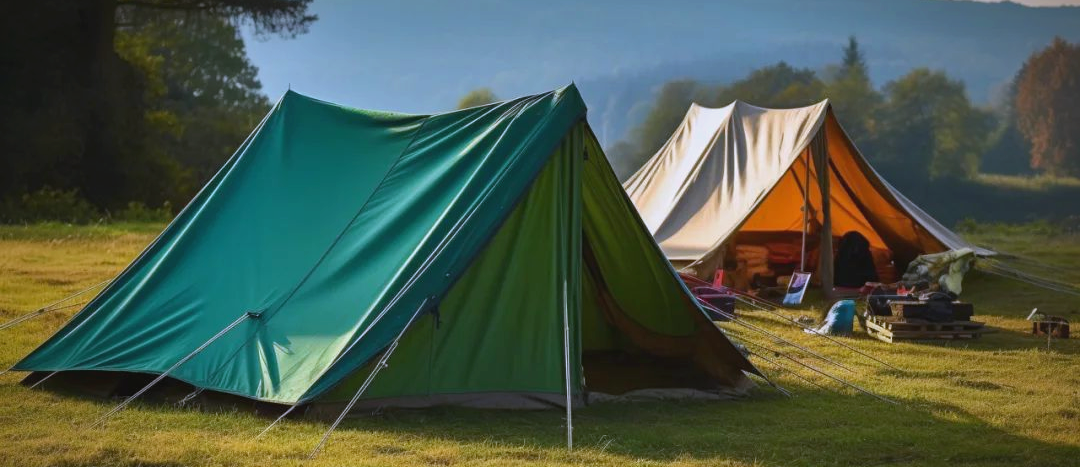
In April 2026, we handled a shipment of family camping tents from Shenzhen to Amazon's SCK4 warehouse in Arizona. The client had shipped tents before and knew the CPSC requirements. But they had a problem we had not seen before.
The client's manufacturer had switched to a new supplier for the carry bags. The new carry bags were single-stitch instead of double-stitch. During transit, 15% of the carry bags tore open – exposing the tents inside. The exposed tents rubbed against each other, causing abrasions on the tent fabric.
When the container arrived at our warehouse in Los Angeles, our receiving team opened the cartons and found the damage. 360 units had damaged carry bags. 120 units had visible fabric abrasions that would make them unsaleable. The client was facing a $6,000 loss plus a delayed FBA launch.
We worked with the client to:
(1) identify the issue – the single-stitch carry bags were the root cause
(2) source replacement carry bags locally ($1,200 cost)
(3) repack the undamaged tents into new carry bags
(4) deliver the shipment to SCK4 within 10 days. The client's FBA launch was delayed by 2 weeks – but they avoided a total loss of $6,000.
We now require all tent clients to provide carry bag samples before the container is loaded. We test the bag strength and verify the stitching quality. This simple pre-shipment verification has eliminated carry bag failures for our tent clients.
What FBA Warehouses Accept Oversized Tents?
Not all FBA warehouses accept oversized items. Here are the primary oversized FBA warehouses:
- · SCK4 (Phoenix, AZ): Primary oversized warehouse for West Coast
- · AZA1 (Goodyear, AZ): Secondary oversized warehouse
- · JAX3 (Jacksonville, FL): Primary oversized warehouse for East Coast
- · RDU2 (Durham, NC): Secondary oversized warehouse
Amazon automatically assigns your tent shipment to one of these warehouses. You cannot choose which one. The assignment depends on your selling region and Amazon's network algorithms.
The warehouse assignment affects your shipping cost. SCK4 and AZA1 (Arizona) are more expensive to reach from the Port of Los Angeles than California warehouses. Drayage to Arizona can add $800-$1,500 compared to California. JAX3 (Florida) is expensive from the West Coast – you may want to use an all-water route via the Panama Canal to Savannah or Jacksonville.
How Do You Prepare Tents for FBA Receiving?
Here is the step-by-step process for preparing tents for FBA receiving.
- 1. Verify CPSC compliance: Confirm tents meet 16 CFR 1632/1633 flammability standards. Ensure permanent labels are sewn in.
- 2. Check unit labels: Each unit must have an FNSKU label. Labels must be clear, scannable, and correctly placed.
- 3. Pack into master cartons: Fold tents consistently. Use double-wall cartons. Seal cartons with strong tape.
- 4. Apply shipping labels: Each carton must have an Amazon Shipping Label on all four sides.
- 5. Palletize: Use GMA-standard pallets (40"×48"). Shrink wrap each pallet. Apply FBA pallet labels on all four sides.
- 6. Create FBA shipment: Create the shipment in Seller Central. Print the shipping plan.
- 7. Book FBA appointment: Book the receiving appointment 2-4 weeks in advance.
- 8. Ship and monitor: Ship the container. Track the vessel. Confirm FBA receiving upon delivery.
Missing any step can delay your shipment or trigger a rejection at the FBA warehouse.
What Does a Tent Rejection Look Like at FBA?
FBA warehouse rejections for tents are common. Here are the most common rejection reasons based on our experience.
Reason 1: Missing FNSKU Labels – Units arrive without Amazon barcodes. The warehouse cannot receive them. The seller pays to have labels applied ($1-$2 per unit) or the shipment is returned.
Reason 2: Damaged Packaging – Cartons are crushed or torn. The warehouse rejects the entire pallet. The seller must arrange for repackaging at a 3PL warehouse.
Reason 3: Incorrect Pallet Height – Pallets exceed the 72-inch maximum. The warehouse cannot put them into the racking system. The shipment is rejected.
Reason 4: Missing CPSC Documentation – Amazon requests CPSC compliance documentation. If the seller cannot provide it, the listing is suppressed – even if the product is already in the warehouse.
A single rejection can cost $1,000-$5,000 in handling fees, return shipping, and lost sales.
Conclusion
Outdoor tent FBA shipping is challenging but manageable with the right preparation. CPSC compliance is non-negotiable – tents must meet 16 CFR 1632/1633 flammability standards and have permanent labels. Packaging must be durable – double-wall cartons, double-stitch carry bags, and proper palletization. FBA appointments must be booked early – 2-4 weeks in advance during peak season.
The cost per unit is low ($3.80-$5.30 per tent) because tents are lightweight and dense. But the risks are high – CPSC exams, FBA rejections, and seasonal timing can all derail your shipment.
At AMERICAN NEW LOGISTICS, we are an Amazon SPN carrier and Wayfair Official Logistics Provider with CTPAT, NVOCC, FMC, and IATA certifications. Our team understands tent shipping – from CPSC compliance and packaging verification to FBA appointment scheduling and warehouse receiving.
We offer a free tent shipping assessment – send us your shipment details, and we will provide a compliance checklist, packaging review, and full door-to-door quote.
Free Tent Shipping Assessment
Send us your tent specs, quantity, and destination. We'll provide a compliance checklist, packaging review, and door-to-door quote. No obligation – just a clear roadmap for your FBA shipment.
FAQ
What CPSC compliance does an outdoor tent need for FBA?
Tents must meet 16 CFR 1632/1633 flammability standards with permanent sewn-in labels and CPSC-accepted lab testing.
Are tents considered oversized for FBA?
Yes, tents exceed standard size limits and are classified as oversized FBA items requiring special handling and palletized delivery.
How many tents fit in a 40ft container?
2,000-3,500 tents depending on size and packaging. Lightweight tents pack more densely than heavy family camping tents.
How much does tent FBA shipping cost per unit?
$3.80-$5.30 per unit via ocean freight consolidation, excluding duties. Air freight is cost-prohibitive.
What FBA warehouses accept oversized tents?
SCK4 (Phoenix, AZ), AZA1 (Goodyear, AZ), JAX3 (Jacksonville, FL), and RDU2 (Durham, NC).
How far in advance should I book an FBA appointment for tents?
2-4 weeks in advance during peak season (March-September). Oversized warehouse slots fill quickly.
What happens if my tent fails CPSC inspection?
The shipment is held at customs. Options are destruction, re-export, or retrofitting – all costly. Prevention is the only practical solution.
Can I ship tents via LCL instead of FCL?
Yes, but LCL has higher damage rates for tents. FCL is recommended for shipments over 15 pallets (1,000+ units).
This article was partially generated by AI and is for reference only.