Chinese

3C Electronics Overseas Warehouse: Requirements, Risks & Costs
3C electronics require specialized overseas warehouses with ESD protection, climate control (15-25°C, 40-60% humidity), security systems, and lithium battery handling certifications. A 3C electronics warehouse is not a standard storage facility – electronics are high-value, damage-sensitive, and compliance-heavy. Key requirements: UN38.3 and MSDS documentation for battery-containing products, FCC compliance files accessible, serial number tracking for inventory, and insurance coverage at full replacement value. Storage costs typically range from $25-$60 per pallet per month, plus value-added service fees for kitting, labeling, and FBA prep. The right warehouse reduces damage risk (standard 3PL damage rates for electronics run 3-8%) to under 1%.
3C electronics – computers, communications devices, and consumer electronics – are a special category. They are high-value, fragile, and subject to more compliance requirements than any other consumer product. A smartphone is not a box of t-shirts. A laptop is not a pallet of furniture. Every electronic device carries risk: ESD damage, lithium battery fires, theft, and FCC compliance failures.
This guide covers what a 3C electronics warehouse actually needs – ESD protection, battery handling, security, inventory management, and compliance documentation – and what it costs.
What Makes a 3C Electronics Warehouse Different from Standard Warehousing?
Standard warehouses store pallets of goods in open racking. A 3C electronics warehouse does everything differently. Here is why.
ESD protection: Electrostatic discharge destroys electronics. A single static shock can damage a circuit board beyond repair. A 3C warehouse requires ESD-safe flooring, grounding straps for staff, and anti-static packaging materials. Standard warehouses do not have these.
Climate control: Electronics need stable temperature (15-25°C) and humidity (40-60%). Excessive heat damages batteries. High humidity causes corrosion. Low humidity increases ESD risk. Standard warehouses are rarely climate-controlled.
Security: A pallet of smartphones is worth $100,000+. Standard warehouses have basic security. 3C warehouses have 24/7 surveillance, access controls, motion sensors, and bonded staff.
Compliance documentation: Every electronic device needs FCC documentation. Many need UL, UN38.3, or MSDS. A 3C warehouse manages these documents and makes them available for audits. Standard warehouses do not.
Inventory precision: Electronics are tracked by serial number, not just SKU. A standard warehouse tracks counts. A 3C warehouse tracks each individual unit.
What Compliance Documentation Does a 3C Electronics Warehouse Need to Manage?
Compliance documentation is the most overlooked part of 3C electronics warehousing. The warehouse does not just store your products – it must also store and manage your compliance files.
| Document Type | Applicability | Agency | Warehouse Role |
|---|---|---|---|
| FCC Declaration | All wireless devices | FCC | Store and provide for audits |
| UL 1647/62368 | Powered electronics | UL | Store and provide for FBA |
| UN38.3 + MSDS | Lithium battery products | EPA/DOT | Verify and store |
| CPSC eFiling Data | Consumer electronics | CPSC/CBP | File at entry |
| Battery Safety Data | All battery-containing devices | EPA/DOT | Verify and store |
If a warehouse cannot manage these documents, it cannot handle 3C electronics. When an Amazon audit or CBP inspection happens, the warehouse must produce these documents immediately. Missing documents mean a listing suppression or a customs hold.
How Does a 3C Warehouse Handle Lithium Battery Products?
Lithium batteries are the most significant risk in 3C electronics warehousing. They can catch fire if damaged, overcharged, or exposed to heat.
A 3C warehouse handling lithium battery products must have:
- · UN38.3 test reports: Each battery model must have a UN38.3 test report. The warehouse verifies this before accepting the shipment.
- · MSDS (Material Safety Data Sheet): The warehouse must store the MSDS for each battery type and make it available for emergency responders.
- · Battery segregation: Damaged or recalled batteries must be segregated in fire-rated containers.
- · Fire suppression: The warehouse must have fire suppression systems rated for lithium battery fires – Class D extinguishers or specialized suppression.
- · Staff training: Warehouse staff must be trained in lithium battery handling and emergency response.
Without these, your shipment will be rejected – or worse, your warehouse could have a lithium battery fire.
What Security Measures Does a 3C Electronics Warehouse Need?
3C electronics are high-value and high-theft items. A pallet of smartphones is worth more than a car. The warehouse must protect them.
Physical security: 24/7 surveillance cameras (with retention), motion sensors, access controls (key card or biometric), and perimeter fencing. The warehouse should have a security guard on site during operating hours.
Inventory control: Serial number tracking is non-negotiable. Every unit must be tracked from receipt to shipment. The warehouse should perform cycle counts weekly, not monthly. Inventory shrinkage of 0.1% on a $1 million inventory is $1,000. On a $10 million inventory, it is $10,000.
Staff screening: Warehouse staff should be bonded and have background checks. Temporary staff should be supervised at all times.
Insurance: The warehouse must carry cargo and storage insurance. Verify the coverage – some warehouses only cover up to $100 per pound, which is insufficient for electronics.
What Are the Biggest Risks in 3C Electronics Warehousing?
Based on our operational experience, here are the five biggest risks for 3C electronics warehousing and how to mitigate them.
Risk 1: ESD Damage – Electrostatic discharge can destroy sensitive electronics. A single static shock from a worker can damage a circuit board. Standard 3PL damage rates for electronics run 3-8%. Mitigation: ESD-safe flooring, grounding straps, anti-static packaging, and staff training.
Risk 2: Lithium Battery Fires – Overheated, damaged, or recalled batteries can ignite. Lithium battery fires are intense and difficult to extinguish. Mitigation: UN38.3 verification, MSDS documentation, battery segregation, and fire-rated storage.
Risk 3: Theft – High-value electronics are targets for theft. Mitigation: 24/7 surveillance, access controls, staff bonding, and serial number tracking.
Risk 4: Inventory Inaccuracy – Lost or misplaced units cannot be sold. Mitigation: Serial number tracking, weekly cycle counts, and WMS (Warehouse Management System) integration.
Risk 5: Compliance Failures – Missing FCC, UL, or UN38.3 documentation leads to FBA listing suppression or CBP holds. Mitigation: Document management system, pre-shipment verification, and CPSC eFiling readiness.
ANL Operational Insight
In February 2026, we received a 40ft container of smart speakers from a manufacturer in Shenzhen. The shipment was destined for Amazon FBA. We received the container at our warehouse in Los Angeles and began the FBA prep process – unpacking, labeling, and palletizing.
During the prep process, our team noticed something wrong. The smart speakers had Bluetooth certification but the FCC documentation from the manufacturer listed a different model number. The documentation did not match the product. We flagged this to the client immediately.
We paused the FBA prep and held the shipment in our warehouse while the client worked with the manufacturer to obtain the correct FCC documentation. The process took 14 days. During that time, we stored the shipment securely at $45 per pallet per month – a cost the client accepted because the alternative was a CBP hold or an Amazon listing suppression.
Once the correct documentation arrived, we verified it against the product, completed the FBA prep, and delivered the shipment to Amazon. The client's listing went live without issues.
If we had not flagged the FCC mismatch, the client would have shipped the product to Amazon, the listing would have been suppressed for missing FCC documentation, and the client would have paid $1,200-$2,000 to have the shipment returned or relabeled. Our pre-shipment documentation verification saved the client from this cost.
We now require all 3C electronics clients to provide FCC documentation before the container arrives at our warehouse. We verify the documentation against the product model numbers before we start FBA prep.
How Does a 3C Electronics Warehouse Handle Serial Number Tracking?
Serial number tracking is essential for 3C electronics. Here is how a good warehouse handles it.
- 1. Receiving: Each unit is scanned and its serial number is logged into the WMS.
- 2. Storage: Units are stored by serial number – not just by SKU. The WMS knows exactly where each unit is located.
- 3. Picking: When an order comes in, the WMS assigns specific serial numbers to the order. The picker scans the serial number to confirm the correct unit.
- 4. Shipping: The serial number is recorded on the shipping manifest. The customer can track their specific unit.
- 5. Returns: When a return comes in, the serial number is scanned, and the unit is tracked through the returns process.
Without serial number tracking, you cannot handle warranty claims, recalls, or returns. A standard warehouse tracks counts. A 3C warehouse tracks each individual unit.
What Does 3C Electronics Warehousing Cost?
3C electronics warehousing costs more than standard warehousing because of the specialized requirements. Here is a cost breakdown.
| Service | Cost Range | Notes |
|---|---|---|
| Pallet storage (monthly) | $25-$60 | Higher than standard due to ESD/climate |
| Inbound receiving | $300-$800 | Includes inspection, serial number scanning |
| FBA prep (per unit) | $0.50-$3.00 | Labeling, bagging, poly-bagging |
| Outbound pick & pack | $2-$8 per order | Serial number verification included |
| Document management | $50-$200/month | FCC, UN38.3, MSDS storage and retrieval |
| Insurance (value-based) | 0.1%-0.3% of value/month | $100-$300 per $100,000 of inventory |
A typical 3C electronics warehouse cost for a 40ft container of smartphones (20 pallets, 30-day storage, FBA prep) runs $2,500-$5,000.
Can a Standard Warehouse Handle 3C Electronics?
Most standard warehouses cannot handle 3C electronics. Here is a quick checklist to evaluate a warehouse for 3C electronics.
- · ESD protection: ESD-safe flooring, grounding straps, anti-static packaging?
- · Climate control: Temperature and humidity monitoring? Stable environment?
- · Security: 24/7 surveillance, access controls, bonded staff?
- · Lithium battery handling: UN38.3 verification, MSDS storage, fire-rated storage?
- · Serial number tracking: WMS with serial number tracking? Weekly cycle counts?
- · Compliance documentation: FCC, UL, UN38.3 document management?
If the warehouse cannot answer yes to all six, it cannot handle your 3C electronics.
How Do You Choose the Right 3C Electronics Warehouse?
Based on our experience, here is the selection process for a 3C electronics warehouse.
- 1. Verify ESD and climate control: Visit the warehouse. Check the flooring. Check the temperature logs. Ask about humidity control.
- 2. Inspect security: Check surveillance cameras, access controls, and security staffing. Ask about theft history.
- 3. Confirm lithium battery capabilities: Ask for UN38.3 verification process. Check MSDS storage. Verify staff training.
- 4. Test serial number tracking: Ask for a demo of the WMS. Check that serial numbers are tracked from receiving to shipping.
- 5. Review compliance documentation management: Ask about FCC, UL, and UN38.3 document storage. Check retrieval time for audits.
- 6. Check insurance: Verify coverage limits. Confirm they cover full replacement value.
- 7. Start with a trial shipment: Send a small test shipment before committing to large volumes.
A good 3C electronics warehouse will pass all seven steps. A standard warehouse will fail most of them.
What Are the Benefits of Using a 3C Electronics Overseas Warehouse?
Despite the higher cost, a 3C electronics overseas warehouse offers real benefits.
Faster fulfillment: Inventory in the US means 2-3 day delivery to customers, compared to 10-15 days from China. For 3C products, speed matters.
Returns processing: 3C products have higher return rates (5-15%). A local warehouse can process returns, test units, and restock or recycle them.
Value-added services: Kitting, custom labeling, FBA prep, and quality inspection can be done at the warehouse before shipping to customers.
Compliance support: FCC, UL, and UN38.3 documentation management. The warehouse ensures compliance documentation is ready for audits.
Inventory control: Serial number tracking, weekly cycle counts, and real-time inventory visibility.
Conclusion
3C electronics require specialized overseas warehouses. ESD protection, climate control, security, lithium battery handling, serial number tracking, and compliance documentation management are not optional – they are required. A standard warehouse cannot handle 3C electronics.
Storage costs range from $25-$60 per pallet per month – higher than standard warehousing – but the reduced damage, theft, and compliance risks make it worthwhile. Damage rates for electronics in standard 3PL warehouses run 3-8%. In a specialized 3C warehouse, damage rates drop to under 1%.
The key to success is choosing a warehouse that understands 3C electronics. ESD protection, lithium battery handling, serial number tracking, and compliance documentation management are all essential.
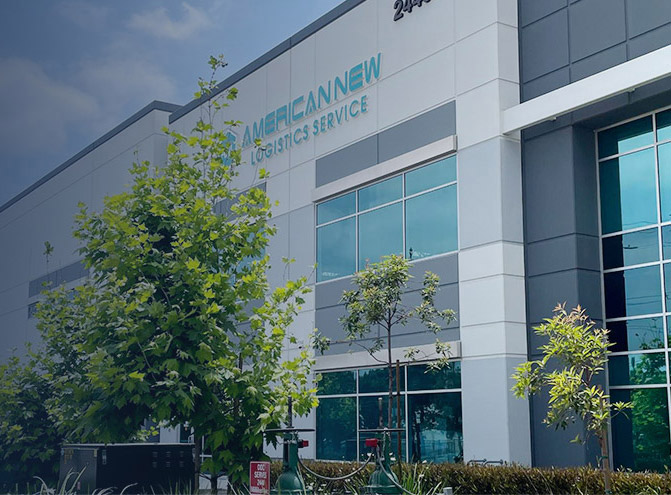
At AMERICAN NEW LOGISTICS, we are an Amazon SPN carrier and Wayfair Official Logistics Provider with CTPAT, NVOCC, FMC, and IATA certifications. Our warehouses in Los Angeles, Long Beach, Savannah, and New Jersey are equipped with ESD-safe flooring, climate control, 24/7 security, and serial number tracking WMS. We handle lithium battery products with UN38.3 verification and MSDS storage.
We offer a free 3C electronics warehousing assessment – send us your product specifications, and we will provide a tailored warehousing plan with cost estimates.
Free 3C Electronics Warehousing Assessment
Send us your product specifications – we'll provide a tailored warehousing plan with ESD, security, and cost requirements. No obligation – just a clear roadmap for your electronics logistics.
FAQ
What is a 3C electronics overseas warehouse?
A specialized warehouse with ESD protection, climate control, security, and lithium battery handling for computers, communications, and consumer electronics.
What compliance documents does a 3C warehouse need?
FCC declarations, UL certifications, UN38.3 test reports, MSDS, and CPSC eFiling data for consumer electronics.
How much does 3C electronics warehousing cost?
$25-$60 per pallet per month for storage, plus inbound receiving ($300-$800) and FBA prep ($0.50-$3.00 per unit).
What is the biggest risk in 3C electronics warehousing?
ESD damage, lithium battery fires, theft, inventory inaccuracy, and compliance documentation failures are all significant risks.
How does a 3C warehouse handle lithium batteries?
UN38.3 verification, MSDS storage, battery segregation, fire-rated storage, and staff training for emergency response.
What is serial number tracking and why is it important?
Tracking each unit individually from receiving to shipping – essential for warranty claims, recalls, and returns processing.
Does ANL offer 3C electronics warehousing?
Yes, ANL operates specialized 3C electronics warehouses in Los Angeles, Long Beach, Savannah, and New Jersey with ESD and security protocols.
This article was partially generated by AI and is for reference only.