Chinese
Vietnam Strength Equipment Shipping to USA: A Practical Guide
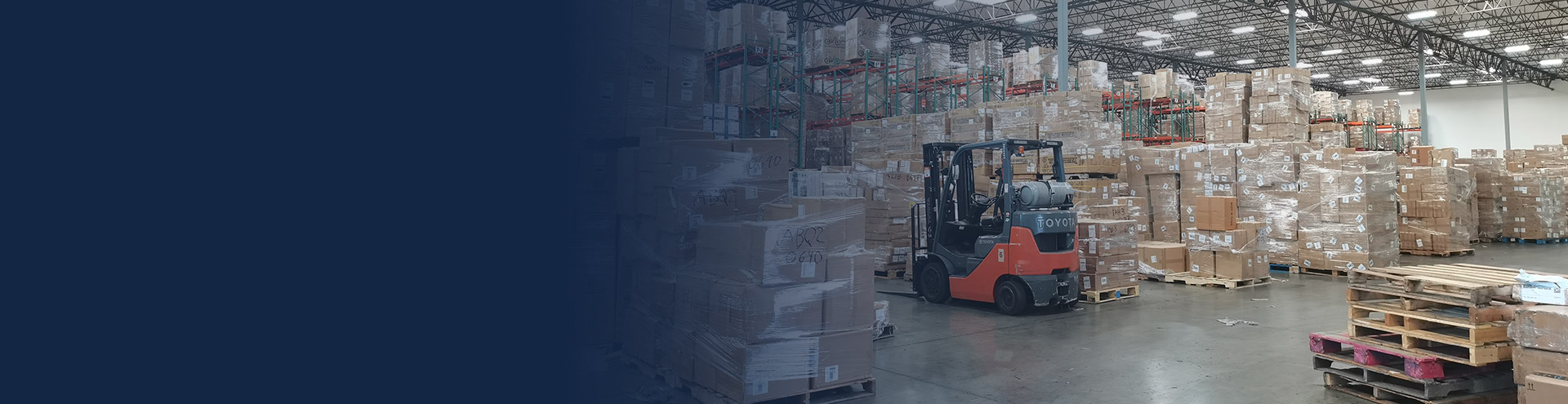
Vietnam strength equipment shipping to the USA is usually an ocean-freight problem, but the ocean leg is only one part of the calculation. Commercial strength machines, power racks, cable systems and plate-loaded equipment are heavy, long and difficult to handle after arrival. For most factory-scale shipments, FCL is more practical than LCL because it reduces handling points and keeps the equipment together. Standard 40HQ containers work when the machines are disassembled and fit within normal internal dimensions. Open Top or Flat Rack equipment becomes relevant when height, width, loading method or cargo weight exceeds standard-container limits. The U.S. side also needs accurate HTSUS classification, entry documents, ISF for covered ocean shipments, and a delivery plan matched to the actual cargo weight.
Vietnam is already an established source of gym and exercise equipment. Public shipment data includes Vietnam-origin exercise equipment moving to the United States under HS 9506.91, including palletized shipments of exercise equipment. (Source: Volza Vietnam Exercise Equipment Import Data, accessed September 2026.)
For a strength-equipment shipment, I would not start by asking for the cheapest ocean rate. I start with the machine dimensions, packed weight, loading method and U.S. delivery point.
That four-part check determines most of the downstream logistics cost.
What Makes Vietnam Strength Equipment Shipping Different?
Strength equipment looks simple on a product catalog. A logistics team sees something else.
Steel frames. Long tubes. Counterweights. Cable assemblies. Heavy plates. Padded seats. Welded structures. Sometimes motors, displays or electronic resistance systems.
The equipment can also change shape dramatically after disassembly.
A fully assembled cable crossover may look impossible to containerize, while the same machine separated into its frame, columns, pulleys and accessory boxes can fit efficiently into a 40HQ container.
This is why the first logistics decision should be made from the packed shipping configuration, not the showroom dimensions.
| Equipment Profile | Typical Challenge | Likely Ocean Option | Main Risk |
|---|---|---|---|
| Disassembled machines | High volume, manageable pieces | 40HQ / 40GP | Poor cube utilization |
| Long steel frames | Length or height | Open Top / Flat Rack | OOG surcharge |
| Dense weight blocks | Concentrated floor weight | 20GP / 40GP after engineering review | Container and chassis weight |
| Assembled project equipment | Cannot fit standard doors | Flat Rack / Breakbulk | Handling and permits |
For recurring Vietnam-origin shipments, seafreight planning should begin before the factory finishes production.
Should You Use FCL or LCL for Vietnam Gym Equipment?
For commercial quantities, FCL is usually the starting point.
FCL means Full Container Load. The shipper controls the container rather than sharing it with unrelated cargo. LCL means Less than Container Load, where cargo from multiple shippers is consolidated.
Strength equipment has several characteristics that make LCL less attractive as volume increases: heavy steel parts, multiple cartons, irregular dimensions and a higher probability of pallet or carton handling.
LCL can still make sense for samples, replacement components or small orders. But the calculation should include destination CFS handling, deconsolidation, palletization and final delivery.
| Factor | FCL | LCL | Practical Consideration |
|---|---|---|---|
| Handling | Fewer cargo touches | More handling points | FCL usually suits heavy steel equipment |
| Volume | Better for larger orders | Useful for small volumes | Compare total landed logistics cost |
| Damage Exposure | Lower handling exposure | Higher handling exposure | Protect painted and upholstered parts |
| Delivery | Container-to-transload possible | Usually requires CFS handling | Consider warehouse proximity |
There is no universal CBM threshold at which FCL suddenly becomes correct. The break point depends on Vietnam origin charges, destination CFS fees, cargo density and how many individual pieces must be handled.
Which Container Is Best for Strength Equipment?
Standard equipment is the best place to start.
A 40HQ can be highly efficient for disassembled power racks, benches, cable machines and plate-loaded equipment when the cartons are engineered for stacking.
Open Top becomes useful when the equipment cannot be loaded through the standard container doors or requires vertical crane loading.
Flat Rack is different. It is intended for cargo that exceeds normal container dimensions and must be secured directly to a heavy-duty platform.
Do not choose a Flat Rack simply because the machine is heavy. Weight alone does not automatically make a shipment OOG, or Out-of-Gauge.
The decision should consider:
- 1.Maximum packed length.
- 2.Maximum packed width.
- 3.Maximum packed height.
- 4.Gross weight of each package.
- 5.Total container gross weight.
- 6.Center of gravity.
- 7.Forklift or crane access at origin.
- 8.Loading and unloading equipment at destination.
For unusual machines, a factory loading drawing is more useful than a product brochure.
How Should Heavy Strength Equipment Be Packed and Loaded?
The container should be treated as a structural system.
A 300 kg steel frame placed against a light carton is not simply a packaging problem. During vessel movement, terminal handling and inland transportation, the concentrated load can transfer force into adjacent packages.
Our preferred workflow is:
- 1.Separate steel frames from vulnerable upholstered or electronic components.
- 2.Use reinforced pallets for dense components.
- 3.Place timber blocking under concentrated loads where appropriate.
- 4.Use steel straps or rated lashing systems for heavy frames.
- 5.Protect painted surfaces from direct contact with chains or steel edges.
- 6.Keep heavy pieces low and distribute weight across the container floor.
- 7.Photograph the loaded condition before the container doors are closed.
- 8.Record package numbers against the commercial packing list.
This final point matters during customs and delivery.
If the packing list says 120 packages and the receiving warehouse counts 118, the team needs a traceable loading record to identify where the discrepancy occurred.
For project cargo that cannot remain in a standard container configuration, ANL also handles oversized cargo planning around specialized loading and U.S. delivery requirements.
What Customs Documents Are Needed for Vietnam Strength Equipment?
For a normal commercial import, the core customs file includes a commercial invoice, packing list, transportation document and accurate product classification and origin information. Additional documents may apply depending on the equipment.
CBP's current guidance states that the commercial invoice or acceptable substitute must contain an adequate description of the merchandise, quantities, values and the applicable HTSUS subheading. (Source: CBP Article 000001175, November 4, 2025.)
That means “gym equipment” may be too broad for a complicated commercial shipment. The invoice should identify what is actually being imported.
For example:
- · Plate-loaded leg press machine
- · Commercial cable crossover station
- · Steel power rack
- · Selectorized strength machine
- · Replacement weight-stack assembly
The exact HTSUS classification still needs to be confirmed based on the actual product. CBP explains that classification can determine duty treatment and other import requirements, and classification may be complex for particular commodities. (Source: CBP Article 000001397, November 4, 2025.)
For covered ocean shipments, ISF is also required. CBP states that ISF must generally be submitted no later than 24 hours before cargo is loaded onto the vessel destined for the United States, and inaccurate, incomplete or untimely filing can lead to $5,000 in liquidated damages per violation. (Source: CBP Article 000001868, November 4, 2025.)
That is why the factory's final product list should reach the customs team before the container is loaded.
Do Strength Machines Need Extra U.S. Compliance Documents?
Not every strength machine requires the same regulatory package.
A basic manually operated steel power rack is different from a motorized treadmill, an electronic resistance machine or a connected smart fitness system.
Once electrical, wireless or motorized components are integrated, the regulatory review can change.
For example, a machine with Wi-Fi or Bluetooth functionality may require FCC analysis. A machine with a combustion engine can raise EPA questions. Certain materials or consumer-product components can involve additional agency requirements.
CBP's guidance states that requirements for specific commodities depend on factors including their HTS classification and that special requirements can involve agencies such as FDA, EPA or DOT. (Source: CBP Article 000001073, current guidance accessed September 2026.)
The correct approach is not to collect every possible certificate.
Identify the exact machine first.
Then determine which U.S. requirements apply.
This prevents two common mistakes: missing a required document and paying for unnecessary certification work.
What Has ANL Learned From Vietnam-Origin Heavy Cargo?
In August 2025, we handled 42 high-cube containers of hotel furniture from Ho Chi Minh City, Vietnam, to the Port of New York and New Jersey for a 120-room Manhattan hotel project. The cargo included solid-oak wardrobes, marble-topped vanities and fragile lighting assemblies.
A CBP intensive examination identified a mismatch involving the wood species information in the Lacey Act declaration. The project faced a threatened union labor standing exposure of more than $45,000 if the cargo remained delayed.
We obtained verified botanical certificates from the Vietnam raw-material mill within 24 hours. After release, we moved the containers to an off-dock facility, devanned the cargo, built protective oversized pallets and arranged liftgate flatbeds for midnight delivery windows over six days.
The project stayed on schedule and avoided the threatened $45,000-plus labor standing exposure.
The published case does not provide individual cargo weights or dimensions. We do not manufacture those numbers. The operational lesson is still directly relevant to strength equipment: Vietnam-origin heavy cargo needs a plan for both customs release and physical handling after release.
A separate ANL fitness-equipment case gives us a useful comparison.
In March 2026, we handled a multifunctional chest developer shipment from Ningbo to Long Beach, California. Each machine weighed 45 kg, with dimensions of approximately 1.5 m × 0.6 m × 0.2 m. The shipment encountered a CBP 5H examination because the wooden pallets lacked IPPC marks and the declared value was materially below the market reference used during review.
We supplied the original factory invoice and payment evidence and arranged emergency pallet treatment at a bonded warehouse. The cargo was released after 12 days. The additional cost was $850 for fumigation and $3,200 in demurrage.
This second case is China-origin rather than Vietnam-origin, but the physical lesson applies directly to Vietnam strength equipment: packaging, declared information and customs documentation can become one operational problem rather than three separate problems.
How Should You Plan U.S. Delivery for Heavy Gym Equipment?
Customs release is not the end of the shipment.
It is the point where the domestic heavy-cargo plan begins.
A commercial gym may have a loading dock. A hotel may have a basement entrance. A residential buyer may have neither.
The correct delivery vehicle therefore depends on the actual receiving site.
| Delivery Situation | Recommended Approach | Equipment Consideration | Main Risk |
|---|---|---|---|
| Commercial gym with dock | Standard truck / flatbed as appropriate | Pallet weight and dimensions | Dock capacity |
| Warehouse without container access | Port drayage + transload | Breakbulk handling | Extra handling |
| Overweight machinery | Specialized chassis / permitted route | Axle distribution | Road restrictions |
| Residential delivery | Liftgate-equipped service | Individual package weight | No dock / narrow access |
For some projects, the most efficient route is port → U.S. warehouse → palletization → final-mile delivery rather than port → customer directly.
That extra step can actually reduce total handling risk when the receiving location is not designed for containers.
ANL's U.S. warehouse network can be used for this type of warehouse transload and distribution workflow when the project requires it.
What Is the Best Workflow for Vietnam Strength Equipment Shipping?
For a recurring Vietnam-to-USA strength-equipment program, I would use this sequence:
- 1.Collect final packed dimensions and gross weights from the factory.
- 2.Separate standard-size cartons from OOG pieces.
- 3.Create a container loading plan before booking.
- 4.Confirm the proposed HTSUS classification and country of origin.
- 5.Review whether the machine contains electrical, wireless, battery or motorized components.
- 6.Prepare the commercial invoice and packing list using the final product configuration.
- 7.Provide the required ISF information before the ocean loading deadline.
- 8.Photograph and document the final container loading.
- 9.Pre-plan U.S. drayage equipment based on actual weight and dimensions.
- 10.Confirm whether the destination requires a warehouse transload, liftgate, flatbed or other specialized delivery.
The biggest mistake is booking the ocean leg first and solving everything else afterward.
For heavy strength equipment, the container booking, customs file and U.S. delivery equipment should be designed as one shipment.
For a full project involving customs and final-mile coordination, cabinet routing can be evaluated alongside transloading and domestic delivery rather than quoting the ocean container as an isolated product.
What Should You Check Before Shipping Strength Equipment From Vietnam?
Use this short pre-shipment test.
| Check | Question | If the Answer Is No | Next Action |
|---|---|---|---|
| Dimensions | Are packed dimensions final? | Container selection may be wrong | Re-measure after packing |
| Weight | Is each heavy package weighed? | Chassis and delivery risk | Obtain verified gross weights |
| Customs | Is classification reviewed? | Duty / entry uncertainty | Broker classification review |
| Compliance | Are special components identified? | PGA or certification issue | Review the actual machine configuration |
| Delivery | Can the destination receive the cargo? | Redelivery or transload risk | Confirm dock, access and equipment |
Conclusion: How Should Vietnam Strength Equipment Be Shipped to the USA?
Vietnam strength equipment shipping to the USA should be planned from the equipment backward, not from the ocean rate forward.
For disassembled commercial machines, standard FCL is often the natural starting point. For equipment exceeding standard dimensions, Open Top, Flat Rack or project cargo options may be necessary. Heavy pieces require verified weights, proper blocking and lashing, and a U.S. delivery vehicle capable of handling the actual load.
Customs preparation is equally important. The invoice needs an adequate product description, classification and value information. Covered ocean shipments require ISF filing within the applicable CBP deadline. Products with motors, electronics, wireless functions or other regulated characteristics may require additional review.
The most reliable quote therefore needs more than origin, destination and CBM. Provide the machine model, packed dimensions, gross weight per package, total quantity, photos of the packed cargo, loading port in Vietnam, U.S. destination and receiving-site conditions.
Risk Assessment: Before booking, review the cargo dimensions, weight distribution, container configuration, customs classification and final-mile equipment as one integrated plan.
Shipping Cost Evaluation: For project cargo, compare the complete landed logistics cost rather than only the Vietnam-to-USA ocean freight rate.
Frequently Asked Questions
1.Can strength equipment from Vietnam be shipped in a 40HQ?
Yes, when the equipment is properly disassembled and the packed dimensions and total weight fit the container's operational limits. The final loading plan should be checked before booking.
2.Is LCL suitable for Vietnam gym equipment?
LCL can work for samples or small shipments, but commercial quantities of heavy steel equipment often benefit from FCL because it reduces cargo handling and destination CFS operations.
3.Does strength equipment always need a Flat Rack?
No. Weight alone does not determine the container type. Flat Rack is mainly relevant when the cargo exceeds standard container dimensions or requires a specialized loading method.
4.What customs documents are needed for Vietnam gym equipment?
Common documents include a commercial invoice, packing list and bill of lading, together with accurate classification, origin and importer information. Additional documents depend on the specific equipment.
5.Does a motorized strength machine need extra compliance review?
It may. Motors, wireless modules, batteries and other electrical components can introduce additional U.S. regulatory requirements. The exact machine configuration should be reviewed before shipment.
6.Can heavy strength equipment go directly from a U.S. port to the gym?
Sometimes. The answer depends on the equipment weight, road restrictions, truck configuration and receiving location. A warehouse transload may be more practical when the final site cannot receive an ocean container.
References
- · U.S. Customs and Border Protection, “Commercial invoice requirements when clearing or filing entry documents with U.S. Customs and Border Protection,” Article 000001175, November 4, 2025. https://www.help.cbp.gov/s/article/Article-1175?language=en_US
- · U.S. Customs and Border Protection, “Filing a formal entry,” Article 000001073. https://www.help.cbp.gov/s/article/Article-1073?lang=en&language=en_US
- · U.S. Customs and Border Protection, “Import Security Filing (ISF) - When to submit to CBP,” Article 000001868, November 4, 2025. https://www.help.cbp.gov/s/article/Article-1868
- · U.S. Customs and Border Protection, “What are the requirements to import specific goods into the United States?”, Article 000001397. https://www.help.cbp.gov/s/article/Article-1397
- · U.S. Department of Commerce, “Common Export Documents.” https://www.trade.gov/common-export-documents
- · Volza, “Exercise Equipment under HSN Code 9506 Imports from Vietnam,” accessed September 2026. https://www.volza.com/p/exercise-equipment/import/hsn-code-9506/coo-vietnam/
This article was partially generated by AI and is for reference only.