AMERICAN NEW LOGISTICS It is an international logistics comprehensive service provider registered in Los Angeles, California, USA
 Chinese
How Electric Forklifts Are Exported from China to the United States Compilance & Shipping GuideRelease time:2026-07-08 views:1342
When electric forklifts are exported from China to the United States, success relies on navigating three pillars: regulatory compliance, precise HTS classification, and heavy/oversized logistics execution. Importers must secure U.S. Environmental Protection Agency (EPA) clearance for motorized vehicles and strict Department of Transportation (DOT) or UN38.3 compliance for large integrated lithium-ion batteries. Shipments typically move via Standard FCL (Full Container Load), Flat Rack, or Roll-on/Roll-off (RoRo) ocean freight. Correctly classifying under HTS Code 8427.10.40 avoids misdeclaration penalties, while factoring in Section 301 tariffs ensures accurate landed cost forecasting before U.S. customs entry.
Moving heavy material handling machinery across trans-Pacific lanes demands an operational depth that standard freight forwarding cannot provide. When AMERICAN NEW LOGISTICS manages industrial vehicle routing, we do not just talk about moving cargo from point A to point B. We evaluate the entire supply chain footprint—from factory-gate battery stabilization to final mile rigging at U.S. distribution centers.
Unlike standard consumer electronics, industrial electric forklifts present unique structural and regulatory challenges. They are incredibly dense, carry high-capacity lithium battery packs classified as Class 9 Hazardous Materials, and possess low ground clearance that complicates standard cross-docking operations. Understanding the exact mechanical and legal parameters of U.S. import protocols saves importers tens of thousands of dollars in port storage fees, customs holds, and unexpected transit accessorials.
You cannot slip an industrial electric vehicle past U.S. Customs and Border Protection (CBP) without triggering rigorous data validation screens. The primary gatekeepers for this asset class are the EPA and the DOT. If your paperwork does not perfectly match the physical manufacturer plates affixed to the machine chassis, your cargo will sit in a bonded yard facing expensive terminal demurrage.
Every single electric forklift entering the United States must comply with EPA regulations under the Clean Air Act, even if it produces zero tailpipe emissions. Importers must file EPA Form 3520-21 via the Automated Broker Interface (ABI) at the time of customs entry. The vehicle must bear an permanent, legible EPA emissions compliance label in English, explicitly stating that the vehicle conforms to federal regulations for nonroad engines. If the machine utilizes a dual-fuel setup or integrated auxiliary internal combustion components for specialized heavy lifts, the compliance tracking becomes even more stringent.
The secondary, yet equally volatile compliance layer involves the large-format lithium battery packs driving the forklift's propulsion. Because these batteries are integrated directly into heavy machinery, they fall under UN3481 regulations (Lithium-ion batteries contained in equipment). The manufacturing plant in China must provide a certified UN38.3 Test Summary (TS) documenting that the cell type has passed brutal thermal, vibration, shock, and short-circuit testing. Without this specific documentation, major ocean lines like Matson, COSCO, and ONE will flatly refuse container booking due to maritime fire safety mandates.
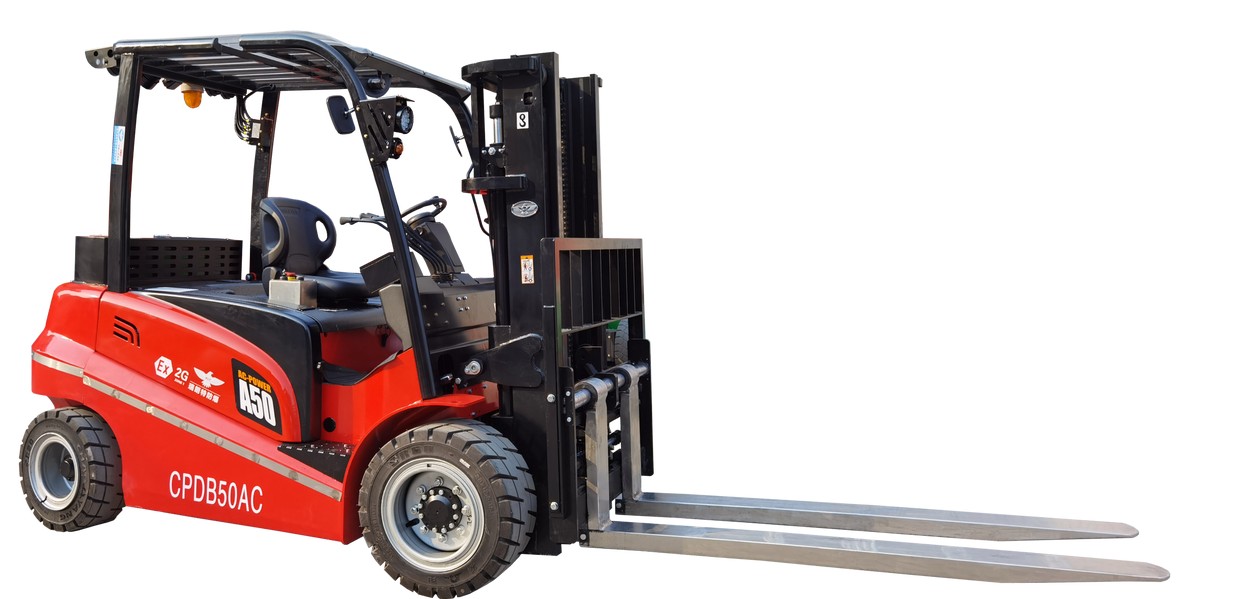
Tariff engineering and accurate Harmonized Tariff Schedule (HTS) classification dictate your ultimate profit margins. Misclassifying an electric forklift as a standard manual pallet jack or a generic lifting apparatus can result in a formal CBP seizure, retroactive duty assessments, and strict structural auditing of your previous five years of import history.
The standard primary classification for an electric-powered rider-type forklift truck is HTS Code 8427.10.4000 (Self-propelled trucks powered by an electric motor, rider-type). This specific code carries a baseline Most-Favored-Nation (MFN) duty rate of 0%. However, global trade strategies require looking deep into Section 301 retaliatory tariffs. Chinese-origin goods under Chapter 84 routinely face an additional 25% ad valorem tariff under the active U.S. trade enforcement acts, significantly inflating the initial cash outlay required at the port of entry.
| Forklift Component Type | Primary HTS Code | Statutory Base Duty | Section 301 Surcharge |
|---|---|---|---|
| Electric Rider Forklifts | 8427.10.4000 | 0.0% | 25.0% |
| Electric Automated Pallet Jacks | 8427.10.8090 | 0.0% | 25.0% |
| Lithium Battery Replacements | 8507.60.0000 | 3.4% | 25.0% |
| Hydraulic Mast Assemblies | 8431.20.0000 | 0.0% | 25.0% |
Furthermore, importers must consistently check active Anti-Dumping and Countervailing Duty (AD/CVD) scopes published by the U.S. Department of Commerce. While certain manual walkie-stackers have faced AD/CVD investigations in past trade cycles, industrial ride-on heavy forklifts generally escape these specific punitive penalties if they are structurally distinguished during the documentation process. Working with a highly experienced provider for customs clearance ensures you utilize the exact legal exemptions applicable to your specific machine geometry.
How you pack and secure an electric forklift dictates whether it arrives ready for the factory floor or structural scrap yard. A standard 3-ton capacity electric forklift weighs roughly 9,000 to 12,000 lbs (4.5 to 5.5 metric tons) due to its massive solid lead-acid or heavy lithium-ion counterweights. This concentrated density prevents you from treating it like standard palletized freight.
For standard-sized electric forklifts, moving via seafreight using standard 20FT or 40FT HC (High Cube) dry vans is highly economical but requires expert blocking and bracing. The low ground clearance of forklifts means specialized heavy-duty loading ramps are required to drive or winch them into the container. Once inside, heavy wood blocks must be spiked directly to the container's marine ply floor, and heavy-duty steel chains or high-tensile polyester strapping must secure the axles to the internal D-rings.
When the mast height exceeds the standard internal door clearing of a High Cube container (approximately 8 feet 5 inches or 2.58 meters), standard containers become unviable. In these scenarios, we pivot to Out-of-Gauge (OOG) solutions using Flat Rack containers or heavy-haul Roll-on/Roll-off (RoRo) vessels. RoRo is exceptionally safe because the machinery is driven directly onto internal weather-protected decks of specialized ships, eliminating crane lifting risks completely. However, RoRo schedules from main Chinese hubs like Shanghai or Ningbo to U.S. ports like Los Angeles or Savannah operate on less frequent rotations than weekly container line networks.
Industrial machinery damage doesn't typically occur during ocean transit; it happens during the structural loading and mechanical securing phases at the origin warehouse. Electric forklifts feature incredibly dense centers of gravity concentrated over small solid rubber or polyurethane wheels. If a warehouse team attempts to cross-dock a heavy forklift using standard low-capacity loading docks, the floor plates can flex, causing critical structural shifts.
To safely execute containerization, the origin facility must execute the following protocol:
1. Mechanics must completely lower the mast assembly to its lowest point and lock it into place to prevent vertical movement that could puncture the container roof during ocean swells.
2. The industrial battery management system (BMS) must be placed into safe transport mode, disconnecting the main high-voltage relays to eliminate any risk of stray electrical arcs.
3. Steel wheel chocks must be positioned circumferentially around all four tires, backed by dimensional timber bracing bolted directly to the container floor rails.
4. Heavy-duty 10mm steel tie-down chains must be tensioned with load binders attached directly to the forklift’s dedicated shipping tie-down eyes, never around hydraulic lines or steering linkages.
Executing this precise process ensures that when the container experiences severe rolling pitches in open ocean transits, the concentrated 5-ton weight does not break free and break through the container side walls, which would cause an catastrophic multi-container collapse on deck.
June 2025: Dealing with Active CBP Intensive Exam on Class 9 Heavy Machinery
In June 2025, ANL handled a critical shipment of 8 heavy-duty 5-ton electric warehouse forklifts moving from Shenzhen to the Port of Long Beach under a strict cabinet contract. Upon arrival, the shipment was flagged by CBP for an intensive MET (Materials Examination Team) review at a Centralized Examination Station (CES).The customs broker at the time failed to provide the distinct UN38.3 test summaries matching the specific serial numbers of the integrated lithium battery packs. Recognizing the risk of an immediate seizure, the ANL team stepped in, leveraged our CTPAT status to gain direct visibility with the port inspectors, and worked with the engineering team in China to retrieve the exact technical documentation within 36 hours. Because we moved quickly, we saved our client from a potential $12,000 fine and minimized the port storage and container chassis split penalties to just 3 days.
This experience highlights why generalized freight forwarders fail when handling industrial vehicles. It is not just about filing an ISF (Importer Security Filing); it is about knowing how to talk to customs officials when they demand specific engineering documentation for specialized heavy equipment.
Once your container clears customs at the port of Los Angeles, New York, or Savannah, the logistical challenges shift to domestic weight limits and specialized delivery equipment. You cannot pull up to a standard commercial office or a tight warehouse lot with a standard container chassis and expect to drop off a 12,000-pound non-running forklift without meticulous planning.
Standard container drayage handles the transit from port to warehouse, but if the final destination lacks an industrial loading dock or a heavy-capacity crane, the container must first go to a specialized warehouse yard for de-consolidation. Here, the forklift is carefully extracted from the container by high-capacity yard trucks. It is then loaded onto a domestic flatbed or lowboy trailer equipped with heavy-duty hydraulic ramps or a specialized drop-deck configuration.
Furthermore, because forklifts are considered oversized or heavy-haul cargo when consolidated in multiples, the inland carrier must verify axle weight limits under federal highway laws. If a single drayage chassis carries two large electric forklifts, the combined weight may exceed the standard 80,000 lbs gross vehicle weight rating (GVWR), requiring specialized tri-axle chassis or state-specific overweight permits to legally move across public roads.
| Delivery Method | Required Site Equipment | Max Weight Capacity | Primary Operational Risk |
|---|---|---|---|
| Standard Drayage Chassis | Industrial Loading Dock | ~44,000 lbs cargo | Forklift cannot exit without a structural dock or ramp. |
| Flatbed Trucking | Heavy Crane or Rigging Crew | ~48,000 lbs cargo | Requires active overhead hoisting infrastructure at site. |
| Lowboy / Drop-Deck Trailer | Ground-Level Access Needed | >60,000 lbs (Permit required) | High cost; requires precise clearance for long trailers. |
During global supply chain bottlenecks or traditional peak freight seasons (August through October), industrial equipment importers face severe structural hurdles. Standard retail items packed in cardboard boxes can easily be shifted between different container types. Heavy machinery, however, has fixed space requirements that cannot be compromised.
When major West Coast gateways like the Port of Los Angeles experience chassis shortages, standard container chassis are prioritized for major e-commerce platforms. Heavy-duty tri-axle chassis, which are essential for legally moving concentrated heavy machinery like electric forklifts, become incredibly scarce. This can cause your container to get stuck in port stacks, accumulating costly storage penalties (demurrage) that can quickly exceed $500 per container every single day.
Additionally, major rail hubs in Chicago and Dallas frequently issue weight restrictions or temporary gate suspensions on heavy inbound international containers during peak weeks. If your logistics provider does not proactively manage these inland rail routings or secure early space allocations, your machinery could be stuck at a coastal port for weeks, delaying critical factory setups or heavy industrial warehouse rollouts.
To demonstrate how these strategies apply in practice, let's look at a major supply chain rollout managed entirely by the ANL heavy projects team in late 2025.
The client originally approached a generic digital freight forwarder who quoted them a lower upfront rate but failed to account for Section 301 tariff management and the necessity of tri-axle chassis in Houston. ANL restructured the entire routing, bypassed risky rail transfers, and delivered the machinery on schedule with zero damage and zero customs delays.
Successfully exporting electric forklifts from China to the United States requires a deep understanding of heavy machinery handling, hazardous materials transit rules, and rigorous customs compliance. Partnering with a proven logistics expert like ANL ensures your high-value industrial equipment is protected at every stage of its journey across the Pacific.
Are you currently preparing an export shipment of electric forklifts or industrial material handling machinery to the United States? Do not risk blind HTS classification errors, costly EPA registration rejections, or unexpected heavy-haul accessorial fees at the port.
Contact our ANL Industrial Logistics Team today for a comprehensive, binding compliance consultation and a detailed freight cost breakdown tailored to your specific equipment dimensions.
1. Do electric forklifts from China face anti-dumping duties in the United States?
Most heavy ride-on industrial electric forklifts do not face active AD/CVD penalties, but specific smaller manual motorized stackers might require precise technical exclusion reviews.
2. What happens if an electric forklift arrives at a U.S. port without an EPA compliance label?
CBP will immediately issue a formal hold, refuse entry, and force the importer to re-export or destroy the entire vehicle at their own expense.
3. Can I ship electric forklifts with the lithium batteries fully installed inside the machines?
Yes, this is classified under UN3481 regulations. It requires a certified UN38.3 test summary and approval from the ocean carrier before vessel loading.
Hot News