AMERICAN NEW LOGISTICS It is an international logistics comprehensive service provider registered in Los Angeles, California, USA
 Chinese
Door to Door Shipping USA Price: What Your Forwarder Isn't Telling YouRelease time:2026-08-12 views:874
Door-to-door shipping to the USA in 2026 costs between $2,800 and $11,000 for a 40ft FCL container, $120 to $220 per CBM for LCL, and $4 to $15 per kg for air freight. But the number on the quote is rarely the number you pay. That $3,800 door-to-door quote can become $7,350 after demurrage, chassis fees, and CBP exams. The difference between a good quote and a bad one is not the base price – it is what the forwarder leaves out. West Coast destinations (Los Angeles) are cheapest, Midwest (Dallas) adds 20-30%, and East Coast (New York) adds 30-50%. Duties and Section 301 tariffs are almost never included unless the quote says DDP – and even then, check the fine print.
Door-to-door sounds simple: you pay one price, your goods move from A to B, and you get a delivery. In reality, the term means different things to different forwarders. Some quotes include origin pickup, export clearance, ocean freight, destination clearance, and final delivery. Others stop at the port and call it "door-to-door" because they handle the trucking from the port to your warehouse. The difference is not semantics – it is thousands of dollars.
We have seen this pattern repeat for over a decade at AMERICAN NEW LOGISTICS. A client chooses the lowest quote. The container arrives. Then the charges start appearing. ISF filing was not included. The bond was not included. Demurrage hit because the broker was slow. The container got examined because the HTS code was wrong. By the time the dust settled, the "cheap" quote was the most expensive one.
This guide is not a generic rate sheet. It is a breakdown of what door-to-door actually costs in 2026, what the price includes, what it does not include, and how to get an accurate quote that does not balloon with hidden fees.
Door-to-door shipping means the freight forwarder handles the entire logistics chain from the seller's factory or warehouse to the buyer's specified address in the USA. That is the theory. Here is the reality.
There are three common interpretations of "door-to-door" in the logistics industry:
Some forwarders quote "door-to-port" and call it "door-to-door." Others quote "port-to-door" and do the same. The only way to know what you are getting is to ask – and get the answer in writing.
For FCL shipments from China to the USA, a full door-to-door service includes: inland trucking from the factory to the Chinese port, export customs clearance, ocean freight, ISF filing, customs bond, destination customs clearance (entry filing), drayage from the US port to the warehouse, and final delivery.
What is almost never included in door-to-door quotes: duties, Section 301 tariffs, demurrage, detention, CBP exam fees, chassis fees, residential delivery fees, and liftgate fees. These are the costs that turn a $3,800 quote into a $7,350 bill.
Here are actual 2026 door-to-door FCL rates from ANL's recent quotes. These are full door-to-door prices – origin pickup, export clearance, ocean freight, destination clearance, and final delivery.
| Container | Los Angeles | Dallas | New York |
|---|---|---|---|
| 20ft FCL | $2,800 – $4,200 | $3,500 – $5,200 | $3,800 – $5,800 |
| 40ft FCL | $3,200 – $4,500 | $4,200 – $5,800 | $4,200 – $6,000 |
| 40ft HC | $3,500 – $5,000 | $4,500 – $6,200 | $4,500 – $6,500 |
These rates include everything except duties, tariffs, and Section 301 tariffs. A 40ft container of furniture valued at $30,000 with a 7.5% Section 301 tariff adds $2,250. A 25% tariff adds $7,500.
The spread in each price range reflects seasonality (peak season August-October adds 20-40%), fuel surcharges (add 4-6%), and carrier selection (Matson is faster and more expensive; ZIM is cheaper and slower).
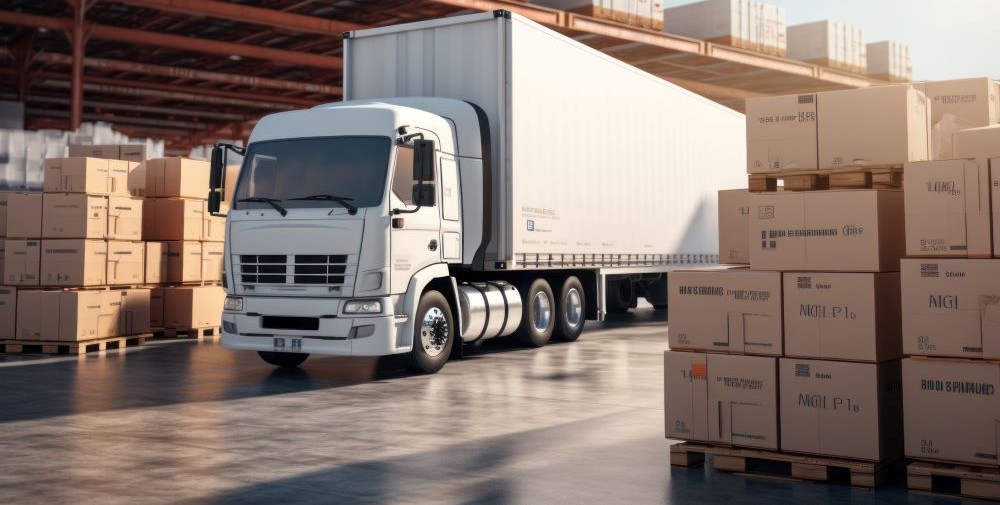
For shipments under 15 CBM, LCL is your only option unless you want to pay for a full container and waste space. LCL door-to-door rates in 2026 range from $120 to $220 per CBM.
Here is what a 5 CBM LCL shipment actually costs door-to-door in 2026:
The LCL door-to-door rate includes: origin pickup, LCL consolidation, ocean freight, destination deconsolidation, customs clearance, and final delivery. It does not include duties, tariffs, or residential delivery fees.
LCL is more expensive per CBM than FCL because of the consolidation and deconsolidation costs. A 5 CBM LCL shipment costs $120-$220 per CBM. A 60 CBM FCL shipment costs $55-$75 per CBM (assuming $3,200-$4,500 for a 40ft container). The premium for LCL is the cost of flexibility – you pay more per unit but only pay for what you use.
Air freight is the fastest option – 5-10 business days door-to-door – but it is also the most expensive. Door-to-door air freight rates in 2026 range from $4 to $15 per kg depending on weight, density, and destination.
Here is what a 100 kg air freight shipment actually costs door-to-door in 2026:
Air freight door-to-door includes: origin pickup, export clearance, air freight, import clearance, and final delivery. Unlike sea freight, air freight rates typically include customs clearance but not duties.
The catch with air freight: dimensional weight. If your shipment is light but bulky, you pay for volume weight – length × width × height in cm, divided by 6,000, equals chargeable kg. A 50 kg pallet that measures 100×100×100 cm charges as 167 kg (1,000,000/6,000). At $8/kg, that is $1,336 instead of $400.
Air freight is for urgent shipments where speed justifies the cost. For regular shipments, FCL or LCL is 80-90% cheaper.
This is where the real story of door-to-door pricing lives. These are the costs that forwarders rarely mention in their quotes – and they can add thousands to your final bill.
Demurrage and Detention: The container has free time at the port – typically 4-7 days. After that, charges start at $100-$350 per day. A 5-day delay adds $500-$1,750. Demurrage is almost never included in door-to-door quotes – it is passed through if delays occur. We have seen clients pay $2,100 in demurrage because their forwarder's broker was slow to file the entry.
CBP Exam Fees: If CBP selects your container for examination, you pay $400-$800 for the exam plus any re-stuffing or warehouse fees. A full exam can add $2,000-$3,000. CBP exam rates for Chinese imports increased in 2026 – we are seeing more exams on furniture, electronics, and textiles.
Chassis Fees: Some ports charge a chassis split fee when the container is moved from the terminal to the chassis. These can be $500 or more. This fee is rarely mentioned in door-to-door quotes.
ISF Filing Fees: Some forwarders include ISF filing in their door-to-door quote. Others charge $50-$150 extra. If the ISF is late, the penalty is $5,000 – and that is not covered by any door-to-door quote.
Warehouse Storage Fees: If your container is held at a warehouse for exam or storage, warehouse handling fees apply – typically $200-$500.
Residential Delivery Fees: If the final delivery address is a residential address, additional fees apply – typically $50-$150. Commercial warehouses are cheaper to deliver to than residential addresses.
Liftgate Fees: If the delivery address does not have a loading dock, a liftgate truck is required – typically $50-$150 extra.
Duties and Tariffs: Unless the quote explicitly says DDP, duties and tariffs are not included. Section 301 tariffs on Chinese goods range from 7.5% to 25%. On a $30,000 shipment, that is $2,250-$7,500.
We have seen a $3,800 door-to-door quote become $7,350 after these hidden costs. The client chose the lowest quote and paid more than the highest quote.
Based on ANL's experience, here are the questions you should ask every forwarder before accepting a door-to-door quote.
Question 1: "What is included in this door-to-door quote?"
Get a written list of included services. Origin pickup? Export clearance? ISF filing? Customs bond? Destination clearance? Drayage? Final delivery? If they cannot list it, they are hiding something.
Question 2: "What is not included?"
Ask specifically about duties, tariffs, demurrage, exam fees, chassis fees, fuel surcharges, residential delivery fees, and liftgate fees. The answer tells you what you will pay later.
Question 3: "Who is the importer of record?"
Under DDP, the forwarder or a third-party IOR acts as the importer. Understand who is responsible for compliance. If the forwarder is the IOR, they handle the bond and entry filing. If you are the IOR, you need your own bond and broker.
Question 4: "What is the free time at the port?"
Typically 4-7 days. Ask what happens after free time expires – demurrage rates vary by port. Long Beach and Los Angeles have different free time rules. Savannah has stricter enforcement than the West Coast.
Question 5: "What is your process for handling CBP exams?"
Does the forwarder cover exam fees or pass them through? What is the typical exam wait time at the port? We have seen exam times of 5-14 days depending on the port and product category.
Question 6: "Can you provide a written all-in quote with exclusions clearly stated?"
If the forwarder will not put it in writing, find another forwarder. A transparent forwarder will itemize every cost and exclusion. A forwarder who is vague is hiding fees.
The goal is not to find the cheapest quote. The goal is to find the quote that reflects the actual cost you will pay.
To get an accurate door-to-door quote, you need to provide the following information to your forwarder. Without this, any quote is just a rough estimate.
Origin address: Factory or warehouse address in China – city, province, ZIP code. This determines inland trucking costs.
Destination address: Final delivery address in the USA – city, state, ZIP code. This determines drayage and final delivery costs. Commercial warehouses are cheaper to deliver to than residential addresses.
Product description: What are you shipping? Material, use, function. This affects HTS classification, duty rate, and exam risk.
HTS code: If known – if not, the forwarder can help classify. HTS classification determines duty rates and exam risk. Incorrect HTS codes trigger CBP exams.
Total weight and volume: Gross weight (kg), total CBM, number of pallets or cartons. This determines shipping costs – FCL vs. LCL vs. air.
Packaging details: Carton dimensions, pallet dimensions, any special handling requirements. This affects handling fees and dimensional weight charges.
Shipping method: FCL, LCL, or air freight.
Incoterms: DDP or FOB – this determines who pays duties and clearance.
A good forwarder will ask for this information upfront. A bad forwarder will quote you a price without asking, because they know the final bill will be higher.
This is a pattern we have seen repeatedly over the past decade. A client chooses the lowest door-to-door quote. The shipment arrives. The hidden charges appear. The total cost exceeds the more expensive quote from a transparent forwarder.
Here is why the cheapest quote is usually the most expensive:
A $3,800 quote that becomes $7,350 is not a $3,800 quote – it is a $7,350 quote that was priced at $3,800 to win the business. The forwarder knew the hidden costs would appear. The client did not.
Door-to-door shipping to the USA in 2026 ranges from $2,800 to $11,000 for FCL, $120-$220 per CBM for LCL, and $4-$15 per kg for air freight. The final price depends on origin, destination, container type, product density, and what is included in the quote.
A transparent door-to-door quote will include: origin pickup, export clearance, ocean freight, ISF filing, customs bond, destination clearance, and final delivery. It will not include: duties, tariffs, demurrage, exam fees, chassis fees, residential delivery fees, or liftgate fees.
The key to avoiding hidden costs is to ask the right questions before you ship. What is included? What is not included? Who is the importer of record? What is the free time at the port? Can you provide a written all-in quote with exclusions clearly stated?
The difference between a good door-to-door quote and a bad one is not the base price. It is what the forwarder leaves out. A transparent forwarder will itemize every cost and exclusion. A forwarder who is vague is hiding fees that will appear after the shipment arrives.
At AMERICAN NEW LOGISTICS, we provide transparent door-to-door quotes with every cost clearly stated. We are a Wayfair Official Logistics Provider and Amazon SPN carrier with CTPAT, NVOCC, FMC, and IATA certifications. Our door-to-door service includes origin pickup, export clearance, ocean freight, ISF filing, customs bond, destination clearance, and final delivery – with no hidden fees.
We offer a free door-to-door price estimate – send us your shipment details, and we will provide a binding all-in quote with every cost itemized.
Hot News