Chinese
What Is a One-Stop Outsourcing Operation Process?
A one-stop outsourcing operation process means that a company assigns multiple connected logistics activities to one coordinated operating structure instead of managing separate providers for freight, customs clearance, warehousing and final delivery. For China-to-USA shipments, the practical workflow usually starts with product and shipment data, then moves through origin handling, ocean or air freight, U.S. customs clearance, drayage, warehouse receiving and final delivery. The real value is not simply having one contact person. It is keeping cargo data, documents, responsibilities, costs and exception handling connected from one stage to the next.
That distinction matters. A forwarder can sell an “all-in-one” package while still subcontracting every operational stage independently. A genuine one-stop outsourcing process has a defined handoff structure, shared shipment data, clear responsibility and a recovery plan when something goes wrong.
For companies expanding from China or Southeast Asia into the U.S., this structure can make logistics easier to manage, but only if the process is designed around the actual cargo rather than around a generic service package. AMERICAN NEW LOGISTICS approaches the process by connecting transportation, customs, U.S. warehousing and final-mile execution around the same shipment data.
What Does a One-Stop Outsourcing Operation Process Actually Include?
The simplest way to understand one-stop outsourcing is to stop thinking about individual services and look at the entire operational chain.
- 1.Requirement intake: product type, quantity, origin, destination, Incoterm, delivery deadline and sales channel are collected.
- 2.Product review: dimensions, weight, packaging, electrical functions, materials and other characteristics are checked.
- 3.Routing design: FCL, LCL or air freight is selected according to volume, inventory coverage and urgency.
- 4.Origin execution: factory pickup, export handling, consolidation, loading and shipping documents are coordinated.
- 5.U.S. import: customs entry, HTSUS classification, applicable agency requirements and entry data are managed.
- 6.Domestic handling: drayage, transloading, warehouse receiving or FBA delivery is arranged.
- 7.Exception management: customs holds, appointment failures, damaged cargo, missing documents and delivery changes are handled through the same operating structure.
That last point is easy to underestimate. Normal shipments are rarely the real test of an outsourcing provider. The real test starts when one piece of information is wrong.
| Stage | Main Responsibility | Typical Failure | Control Point |
|---|---|---|---|
| Origin | Pickup and loading | Wrong carton data | Pre-shipment audit |
| International | Ocean or air freight | Rollover or delay | Routing and backup plan |
| Customs | Entry and compliance | Hold or document request | Pre-clearance review |
| U.S. delivery | Drayage, warehouse, final mile | Appointment failure | Destination planning |
Why Is Data Integration More Important Than Having One Contact Person?
A single salesperson does not create a one-stop operation.
The more useful question is whether the same shipment data follows the cargo through every operational stage. Product descriptions, carton quantities, gross weight, dimensions, consignee information, delivery address and customs data should remain consistent.
CBP requires commercial invoices to contain adequate merchandise descriptions, quantities, values and the applicable HTSUS subheading. This means the information supplied at the beginning of the shipment eventually becomes part of the customs process. (Source: U.S. Customs and Border Protection, Commercial Invoice Requirements, November 4, 2025.)
A practical internal rule is simple: the product specification, commercial invoice, packing list, customs entry and warehouse receiving information should describe the same physical shipment.
This is one reason we recommend customs clearance planning before the cargo leaves the factory rather than treating customs as a final-stage administrative task.
How Should Companies Build the Process Before the Cargo Ships?
The best time to identify an outsourcing problem is before the booking is confirmed.
For a new China-to-USA logistics program, I would use this sequence:
- 1.Confirm the exact product and its physical characteristics.
- 2.Confirm origin, destination and delivery type.
- 3.Review the proposed HTSUS classification.
- 4.Identify product-specific regulatory requirements.
- 5.Check carton dimensions, weight and packaging.
- 6.Choose FCL, LCL or air based on inventory requirements.
- 7.Confirm the U.S. importer and customs structure.
- 8.Define the warehouse or final-mile receiving requirements.
- 9.Agree on who handles exceptions and additional charges.
This is also where a company should compare service providers. Do not ask only for a freight rate. Ask what happens when customs requests additional documents, when an FBA appointment is unavailable, or when the cargo reaches the U.S. with different carton dimensions than those originally booked.
What Compliance Responsibilities Stay With the Importer?
Outsourcing logistics does not automatically outsource legal responsibility.
The Importer of Record, or IOR, is the party responsible for the accuracy and compliance of the import transaction even when a customs broker assists with filing. CBP states that a foreign company may import into the United States under certain structures, but the importer or representative remains responsible for maintaining compliance. (Source: CBP Article 000001147, April 10, 2026.)
This is particularly important for a one-stop model. The service provider may coordinate customs, but the importer should understand:
| Area | What the Provider Can Coordinate | What the Importer Must Understand |
|---|---|---|
| Classification | Broker review and filing support | Actual product and classification basis |
| Compliance | Document coordination | Applicable product rules |
| Duties | Cost calculation support | Who is legally responsible |
| Delivery | Transport and appointment | Receiving requirements |
The Federal Maritime Commission also maintains a public database of licensed Ocean Transportation Intermediaries, including NVOCCs and freight forwarders. This provides one useful verification point when evaluating an ocean logistics outsourcing partner. (Source: Federal Maritime Commission, Licensed NVOCCs, accessed September 2026.)
What Does a Real One-Stop Outsourcing Cost Model Look Like?
A one-stop quotation should not be judged by the lowest ocean freight line.
The practical model is:
Total Logistics Cost = Origin + International Freight + Customs + Destination Charges + Drayage + Warehouse/Fulfillment + Final Mile + Exception Costs
For example, an ocean quote can appear cheaper while excluding U.S. drayage, customs brokerage, warehouse handling or appointment-related delivery costs.
ANL's published 2026 smart pet feeder shipment provides a useful example. The shipment contained 720 Wi-Fi pet feeders, 60 cartons, 42 CBM and 840 kg, moving from Shenzhen to Amazon FBA ONT8. The published non-duty logistics cost was approximately $8–$15 per unit, including the broader logistics chain rather than ocean freight alone. These figures are shipment-specific and should not be treated as a universal market rate.
The calculation is useful because it shows what “one-stop” changes. Instead of asking whether ocean freight costs $3,000 or $3,500, the importer can compare the complete cost of getting one sellable unit into the U.S. fulfillment network.
For recurring shipments, seafreight can be modeled together with customs, U.S. warehouse handling and domestic delivery rather than priced as an isolated service.
What Happens When the Outsourced Operation Encounters a Customs Problem?
This is where the difference between a real operating system and a sales package becomes obvious.
In March 2026, we handled a multifunctional chest developer shipment from Ningbo to Long Beach, California. Each machine weighed approximately 45 kg and measured about 1.5 m × 0.6 m × 0.2 m. CBP placed the shipment under a 5H examination because the wooden pallets lacked IPPC marks and the declared value was approximately 30% below the market reference used during review.
The exposure was concrete: the cargo remained under examination for 12 days, with $850 in emergency fumigation costs and $3,200 in demurrage.
Our team supplied the original factory invoice and bank-transfer evidence, then coordinated emergency pallet treatment at a bonded warehouse. The shipment was released after 12 days. The important operational lesson was not that customs examinations can be eliminated. They cannot. The lesson is that the same operating team must be able to move from documentation review to physical cargo recovery without waiting for multiple suppliers to decide who owns the problem.
The case also changed our pre-shipment checklist. We now treat packaging marks, declared value and customs documents as connected controls rather than separate paperwork items.
Can One-Stop Outsourcing Reduce Warehouse and FBA Problems?
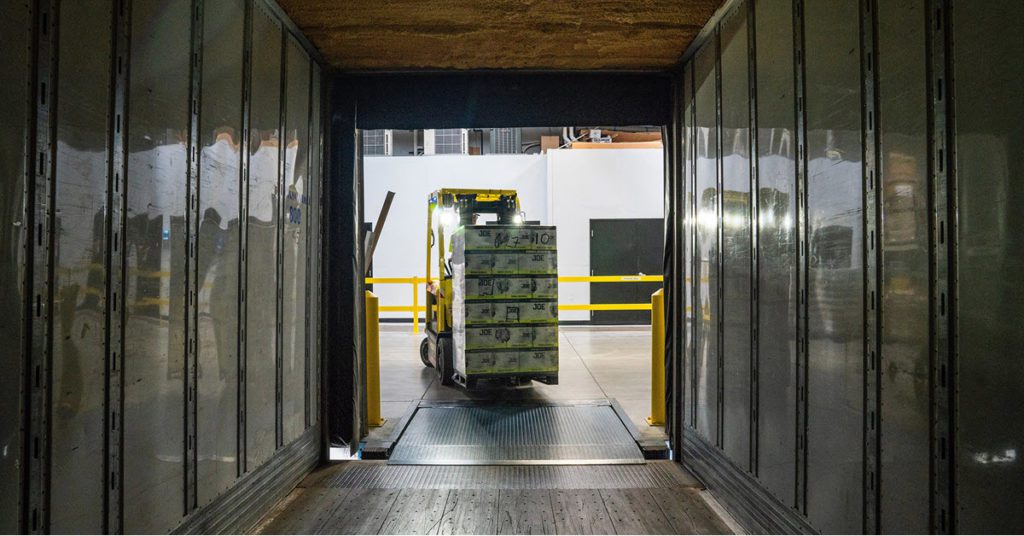
Yes, but only when the U.S. receiving operation is included in the process.
In early 2026, we handled 720 smart pet feeders from Shenzhen to Amazon FBA ONT8. The shipment consisted of 60 cartons, 12 units per carton, with each carton measuring 50 × 40 × 35 cm and weighing 14 kg. Total cargo was 42 CBM and 840 kg.
The product combined Wi-Fi, camera and app-control functions. That meant the shipment could not be treated as a simple plastic pet product. FCC review, applicable consumer-product requirements, HTS classification, carton data and FBA information all had to describe the same product.
Our operating approach was to bind those data points before the cargo entered the U.S. logistics chain. The published logistics model produced approximately $8–$15 per unit in non-duty logistics cost.
The operational takeaway is broader than the feeder itself. If customs data says one thing, the warehouse receives another configuration, and FBA receives a third set of carton information, a company can have a shipment that technically arrived in the United States but still cannot be sold efficiently.
For larger programs, an warehouse can provide a buffer between port discharge and final fulfillment, particularly when inventory needs inspection, relabeling, palletizing or appointment coordination.
How Can You Tell Whether a Provider Really Offers One-Stop Outsourcing?
Ask operational questions rather than sales questions.
A genuine one-stop provider should be able to explain who owns each stage and what happens when that stage fails.
| Question | Weak Answer | Useful Answer |
|---|---|---|
| Who handles customs? | Our partner | Named customs workflow and responsibility |
| Who handles port delays? | Operations team | Specific escalation process |
| Who manages warehouse receiving? | Local warehouse | Receiving rules and exception ownership |
| What is included in the quote? | Door-to-door | Itemized cost and exclusions |
There is another useful test. Ask the provider to describe one shipment that did not go according to plan.
If the answer only describes successful transit, you still do not know how the operation behaves under pressure.
For ocean programs, also verify the provider's regulatory position. The FMC maintains a searchable database of active licensed NVOCCs and freight forwarders, which can be used as part of the supplier due-diligence process.
What Is the Practical Decision Tree for One-Stop Logistics Outsourcing?
You can reduce the decision to six questions:
- 1.Is the shipment recurring? If yes, build a standardized operating process instead of buying individual shipments.
- 2.Does the product have regulatory complexity? If yes, involve compliance and customs before booking.
- 3.Is the cargo large or volume-sensitive? If yes, compare FCL, LCL and warehouse-based distribution using total cost.
- 4.Does the destination have strict receiving rules? If yes, include the warehouse or platform requirements at the origin planning stage.
- 5.Would a failure at one stage affect sales? If yes, define an exception-management process before the first shipment.
- 6.Can the provider show responsibility across the whole chain? If not, the service may be bundled forwarding rather than genuine one-stop outsourcing.
This framework is more useful than choosing a provider simply because it offers more services. More services do not automatically mean better control. The real question is whether those services operate as one process.
What Should Companies Check Before Signing a One-Stop Outsourcing Agreement?
Before moving from several suppliers to one operating partner, I recommend checking five areas.
- 1.Scope: define exactly which activities are outsourced and which remain with the importer.
- 2.Data: establish one source of truth for product, shipment, customs and warehouse information.
- 3.Cost: identify included charges, exclusions, accessorial fees and potential exception costs.
- 4.Responsibility: assign ownership for customs holds, port delays, damaged cargo and failed appointments.
- 5.Visibility: confirm how shipment status, customs status, warehouse receiving and final delivery are reported.
For recurring China-to-USA operations, the biggest efficiency gain often comes from reducing repeated decisions. Once the product data, routing rules, customs requirements and U.S. receiving requirements are standardized, every new shipment becomes easier to execute.
That is the real purpose of a one-stop outsourcing operation process: not simply to put more services under one invoice, but to reduce the number of disconnected decisions between factory and final delivery.
What Is the Bottom Line on One-Stop Outsourcing Operation Process?
A one-stop outsourcing operation process works when freight, customs, warehousing and final delivery are managed as connected stages rather than independent purchases.
The most important control is data consistency. The product specification should match the commercial invoice. The invoice should support the customs entry. The packing list should match the physical cargo. The warehouse should receive the same shipment information that was used to plan the delivery.
The second control is responsibility. When a customs issue, port delay or warehouse problem occurs, somebody must already own the recovery process.
The third control is total cost. Compare the cost of the entire logistics chain, not only the ocean freight rate.
For companies evaluating a China-to-USA outsourcing model, a useful next step is a shipment-specific Risk Assessment covering product data, customs structure, transportation, U.S. warehousing and final-mile requirements before the first booking is confirmed.
Frequently Asked Questions
1.What is a one-stop outsourcing operation process?
It is a coordinated workflow in which multiple connected business or logistics activities are managed through one operating structure, with shared data, defined responsibilities and centralized exception handling.
2.What does one-stop logistics outsourcing usually include?
It can include origin pickup, export handling, ocean or air freight, customs clearance, drayage, warehousing, fulfillment and final-mile delivery, depending on the agreed scope.
3.Does one-stop outsourcing transfer legal responsibility to the logistics provider?
No. Service providers can coordinate customs and transportation, but the importer should understand its Importer of Record and compliance responsibilities.
4.Is one-stop logistics always cheaper?
Not automatically. Its value should be evaluated using total landed logistics cost, including origin charges, freight, customs, destination handling, drayage, warehousing and final-mile delivery.
5.How can I tell if a logistics company is truly one-stop?
Ask who controls each stage, who handles exceptions, what costs are included, how data is shared and which operating entities actually perform the work.
6.When should the outsourcing process be reviewed?
Process design should normally be reviewed at least every six months, while customs rules and other regulatory requirements should be reviewed whenever the applicable policy changes. Cost structures should be reassessed more frequently when freight or domestic delivery conditions change.
References
- · U.S. Customs and Border Protection — Commercial Invoice Requirements, November 4, 2025: https://www.help.cbp.gov/s/article/Article-1175?language=en_US
- · U.S. Customs and Border Protection — Foreign Company Exporting to the United States Without an Importer of Record, April 10, 2026: https://www.help.cbp.gov/s/article/Article-1147
- · Federal Maritime Commission — Licensed NVOCCs: https://www2.fmc.gov/OTI/NVOCC.aspx
- · Federal Communications Commission — Equipment Authorization System: https://opendata.fcc.gov/Engineering-Technology/EAS-Equipment-Authorization-Grantee-Registrations/3b3k-34jp
- · U.S. Consumer Product Safety Commission — Certificates of Compliance and eFiling: https://www.cpsc.gov/Business--Manufacturing/Business-Education/Business-Guidance/Certificates
- · AMERICAN NEW LOGISTICS — How to Export Pet Electronics to USA: https://en.anl-cn.com/newsdetail/88.html
- · AMERICAN NEW LOGISTICS — How to Ship Chest Developer from China to USA: https://en.anl-cn.com/newsdetail/54.html
This article was compiled with AI assistance to gather industry data, and then manually reviewed, revised, and finalized by ANL specialist.