Chinese

What Should You Know About Imported Pet Feeders in the USA?
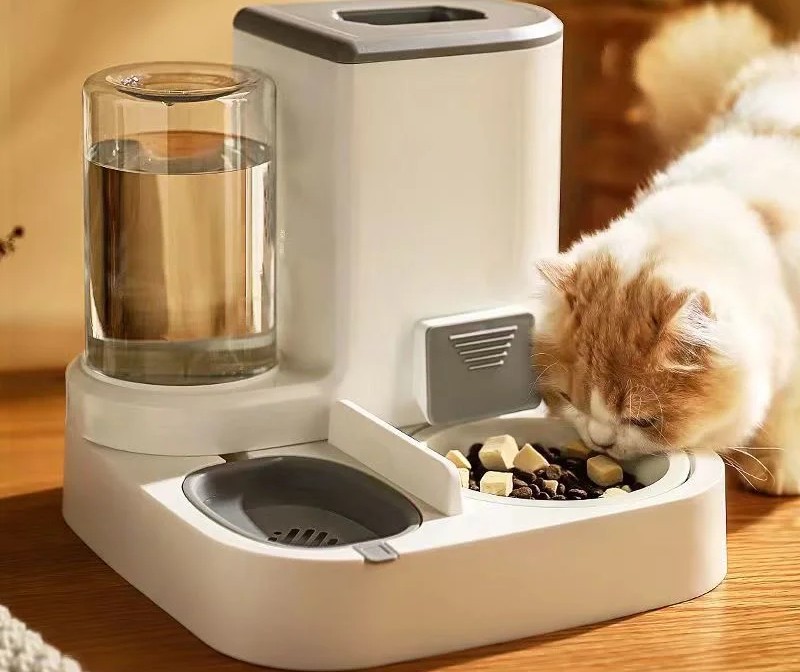
Imported pet feeders do not all face the same U.S. entry requirements. A basic automatic feeder, a Wi-Fi smart feeder, and a feeder with a camera can trigger different compliance reviews. For a smart model, FCC requirements may apply to the radio function, while CPSC certificate requirements depend on whether an applicable consumer-product safety rule covers the product. If the feeder includes food-contact components, the material and intended use should also be reviewed rather than assuming FDA registration automatically applies. Before shipment, the importer should align the product specification, HTS classification, invoice, packing list, compliance documents, and FBA information. This reduces the risk of solving a documentation problem after the container has already arrived.
Why Does an Imported Pet Feeder Need a Product-Specific Review?
The name “pet feeder” is too broad to determine the import process.
A gravity feeder is very different from an automatic feeder with a motor. Add Wi-Fi, Bluetooth, a camera, a rechargeable battery, or an app-controlled dispenser, and the compliance review changes again.
That is the first point I would clarify with an importer.
Do not start with the question, “What certificate does a pet feeder need?” Start with, “What exactly is inside this pet feeder?”
For a typical smart feeder, I would check five product characteristics:
- 1.Does it contain a wireless communication module?
- 2.Does it contain a motor or other electrical mechanism?
- 3.Does it contain a lithium battery?
- 4.Does any part directly contact pet food?
- 5.Does it contain a camera or other additional electronic function?
These characteristics determine which agencies and documents need to be reviewed.
| Pet Feeder Configuration | Main Review | Typical Question |
|---|---|---|
| Manual feeder | Customs / product classification | What is the actual product construction? |
| Automatic electric feeder | Electrical/product safety review | What electrical components are included? |
| Wi-Fi/Bluetooth feeder | FCC + consumer product review | Is the RF function properly authorized? |
| Battery-powered feeder | Battery transport + product review | What battery is installed and how is it shipped? |
This product-first approach is also useful when selecting customs clearance support because the broker needs accurate product information before making the entry.
Does a Smart Pet Feeder Need FCC Certification?
If the feeder contains an RF function, FCC review becomes relevant.
The FCC states that RF devices are required to be properly authorized under 47 CFR Part 2 before being marketed or imported into the United States. (Source: FCC Office of Engineering and Technology, Equipment Authorization System, accessed September 2026)
That matters for a Wi-Fi or Bluetooth-enabled pet feeder.
But I would not write “all pet feeders need FCC certification.” A simple feeder without an RF transmitter is a different case.
For a smart feeder, the pre-shipment review should confirm:
- 1.The wireless module model.
- 2.The applicable FCC authorization information.
- 3.The relationship between the module and the finished product.
- 4.Whether the final configuration matches the tested configuration.
- 5.Whether the product description used for customs and marketplace documentation is consistent.
A common operational mistake is to obtain an FCC document for the wireless module and assume the entire finished product documentation is automatically complete. The actual product configuration still needs to be reviewed.
For example, if the factory changes the wireless module after testing but keeps the same product model number, the document trail may no longer describe the actual imported product.
Does an Imported Pet Feeder Require CPSC eFiling?
CPSC requirements should be determined from the applicable consumer-product safety rules, not simply from the word “pet.”
As of July 8, 2026, CPSC requires importers of consumer products subject to its certification requirements to electronically file certificate data through CBP's PGA Message Set. (Source: CPSC, “CPSC Implements Mandatory eFiling for Certificates of Compliance,” July 8, 2026)
CPSC's current guidance also makes clear that the eFiling requirement applies to imported products that are subject to CPSC certification requirements. It is therefore not accurate to treat every pet feeder as automatically requiring the same certificate.
The practical workflow is:
- 1.Identify the specific consumer-product safety rule applicable to the product, if any.
- 2.Determine whether a General Certificate of Conformity is required.
- 3.Confirm the testing information supporting the certificate.
- 4.Prepare the required certificate data.
- 5.Make sure the certificate, invoice, packing list, and entry information describe the same product.
- 6.Coordinate the eFiling information with the customs broker before entry.
CPSC's eFiling FAQ states that certificates must identify applicable rules, testing information and testing laboratories, with additional certificate-content requirements effective July 8, 2026. (Source: CPSC, eFiling Frequently Asked Questions, updated 2026)
That makes document consistency much more important than it was when sellers could simply keep certificates in a folder and wait for a request.
Does a Pet Feeder's Food-Contact Bowl Create FDA Requirements?
This is where many articles become too broad.
A feeder bowl touching pet food does not automatically mean that the finished electronic feeder must be treated exactly like imported pet food.
FDA regulates animal food and also regulates substances used in food-contact applications under specific conditions. FDA's food-contact guidance explains that substances expected to migrate into food can fall within the food-contact regulatory framework, depending on their intended use and authorization status. (Source: FDA, Understanding How FDA Regulates Substances that Come into Contact with Food, accessed September 2026)
For an imported feeder, I would therefore separate two questions.
| Question | What to Review | Why It Matters |
|---|---|---|
| Does the shipment contain pet food? | FDA animal-food import requirements | Pet food itself is FDA-regulated |
| Does the feeder contain food-contact materials? | Material and intended-use review | Food-contact substances can have specific FDA requirements |
| Is the bowl removable? | Actual material and use | The food-contact component may need separate documentation |
The important point is to avoid two opposite mistakes: ignoring the bowl material entirely, or telling every feeder importer that an FDA import registration is automatically required.
How Should You Determine the HTS Code for an Imported Pet Feeder?
Pet feeders are another category where the product name alone is not enough.
A manual plastic feeder, an automatic feeding machine, and a Wi-Fi feeder with a camera can have materially different classification considerations.
CBP requires the commercial invoice to include an adequate merchandise description, quantity, value, and the appropriate eight-digit HTSUS subheading. (Source: CBP, Commercial Invoice Requirements, November 4, 2025)
The practical classification workflow should therefore look like this:
- 1.Identify the product's primary function.
- 2.List all major electrical and mechanical functions.
- 3.Identify wireless and camera functions.
- 4.Review the construction and material composition.
- 5.Check previous rulings for genuinely comparable products.
- 6.Have the broker review the proposed HTS classification.
- 7.Use a binding ruling when the classification remains uncertain and the shipment value justifies the extra certainty.
ANL's July 2026 pet-electronics article also documented why smart feeders cannot simply be classified by their marketing category: the published example was a Wi-Fi feeder with camera and app control, and the article noted that the primary function and configuration affect classification.
Do not copy an HTS code from another seller simply because the product title looks similar.
How Much Does It Cost to Import Pet Feeders from China to the USA?
The most useful number is not the ocean freight quote. It is the landed cost per unit.
ANL's published operational data from early 2026 gives us a concrete example.
Shipment: 720 smart pet feeders with Wi-Fi, camera and app control; 60 cartons; 12 units per carton; carton size 50 × 40 × 35 cm; carton weight 14 kg; total weight 840 kg; total volume 42 CBM; Shenzhen, China to Amazon FBA ONT8 in Ontario, California.
The published cost model, excluding duties, included origin trucking, ocean freight, terminal charges, export clearance, insurance, U.S. customs clearance, destination charges, drayage and FBA delivery.
The reported non-duty landed logistics cost was approximately $8–$15 per unit. With the article's illustrative 15% duty assumption on a $30 FOB value, the reported combined range was approximately $12.50–$19.50 per unit. These are shipment-specific figures, not a universal 2026 market quote.
| Cost Item | Published Example | What Changes the Cost |
|---|---|---|
| Ocean freight | $2,500–$4,000 | Port, season, carrier and equipment |
| U.S. customs clearance | $350–$550 | Broker, bond, entry complexity |
| Drayage to ONT8 | $650–$900 | Port, appointment and delivery conditions |
| FBA delivery | $300–$500 | Warehouse appointment and local delivery |
This is why comparing two freight-forwarder quotes only by ocean freight can be misleading.
A $300 saving on the ocean leg can disappear if the destination handling, customs, drayage or FBA delivery structure is different.
Should You Ship Imported Pet Feeders by FCL, LCL or Air?
The answer depends mainly on inventory volume and stockout risk.
FCL means Full Container Load. LCL means Less than Container Load, where cargo shares container space with other shipments.
For a relatively compact electronic product, the calculation is straightforward.
- · Small test shipment: LCL can avoid committing to a full container.
- · Regular replenishment: FCL becomes more attractive when volume is large enough to use container space efficiently.
- · Urgent stockout: Air freight may be justified when the cost of running out of inventory exceeds the freight premium.
In the ANL shipment described above, 720 feeders occupied 42 CBM and moved from Shenzhen to ONT8 by ocean freight. That is a very different scenario from a seller sending 50 units for a first market test.
The decision should therefore be based on three numbers:
- 1.Current inventory coverage in days.
- 2.Next replenishment volume in CBM.
- 3.Cost of a stockout compared with the air-freight premium.
For planned container shipments, seafreight usually becomes the starting point for the cost model, while urgent replenishment requires a different calculation.
What Documents Should Be Checked Before an Imported Pet Feeder Leaves China?
I would run the documentation review in this order.
- 1.Product specification: confirm model, power supply, wireless module, camera, battery and food-contact components.
- 2.Compliance documents: collect applicable FCC, CPSC and other product documentation.
- 3.Commercial invoice: make the product description specific enough for customs classification.
- 4.Packing list: verify carton count, dimensions, weight and SKU information.
- 5.HTS classification: confirm the proposed code with the customs broker.
- 6.Battery documents: if lithium batteries are included, review applicable transportation documentation before booking.
- 7.FBA information: make sure unit labels, carton labels and shipment information match the actual cargo.
- 8.Entry data: coordinate applicable CPSC eFiling information with the broker before entry.
The key is consistency.
If the factory specification says “Wi-Fi smart feeder with camera,” while the commercial invoice says simply “plastic pet bowl,” the problem is not just poor wording. The documents are describing different products.
For larger inventory programs, a warehouse buffer can also reduce the pressure created by FBA appointment delays or inventory receiving issues.
What Did ANL's Pet Feeder Shipment Reveal About Import Risk?
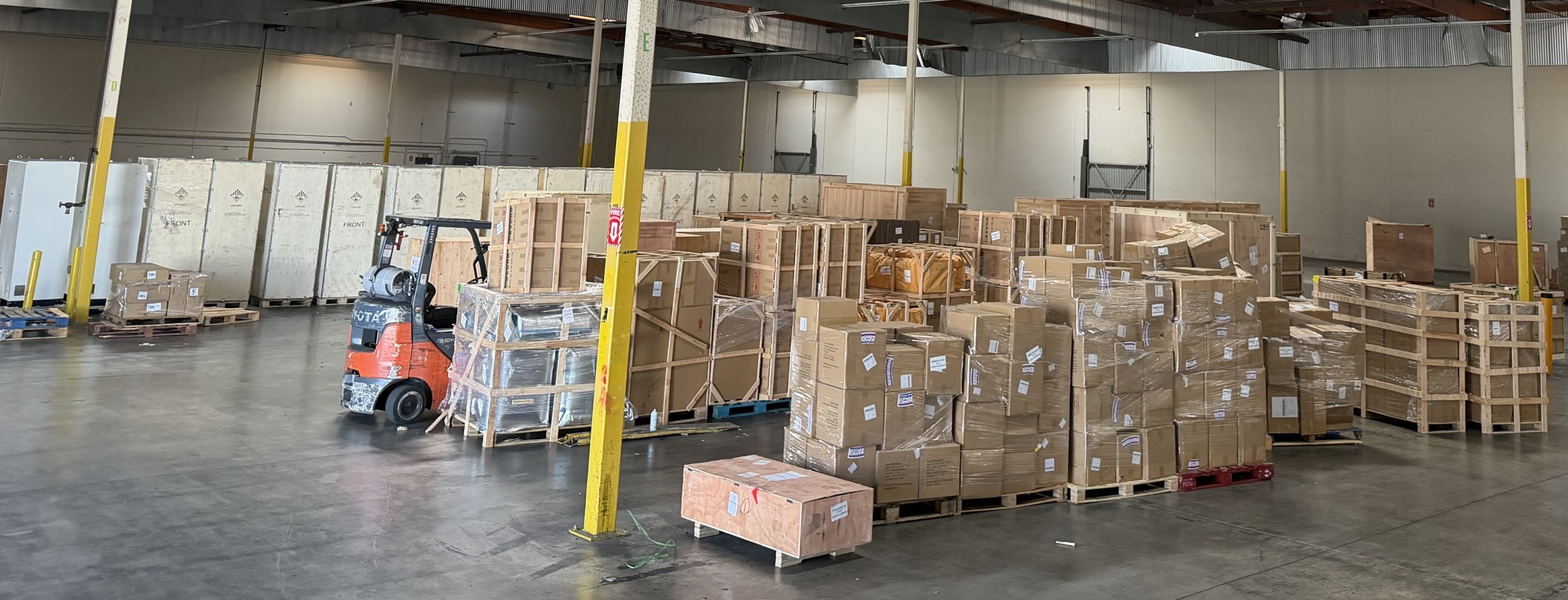
In early 2026, ANL handled a shipment of 720 smart pet feeders with Wi-Fi, camera and app-control functions from Shenzhen to Amazon FBA ONT8. The shipment contained 60 cartons, with each carton holding 12 units; each carton measured 50 × 40 × 35 cm and weighed 14 kg, producing 42 CBM and 840 kg of total cargo. The published logistics model placed the non-duty logistics cost at approximately $8–$15 per unit.
The useful part of this case is not simply the freight number.
The shipment combined three things that are easy to separate on paper but difficult to separate operationally: wireless electronics, consumer-product compliance, and Amazon FBA delivery.
The shipment also shows why the document review needs to happen before the container is loaded. The product description, FCC information, CPSC certificate data, HTS classification, carton information and FBA data all describe the same physical product from different angles.
That is the operational checkpoint I would keep.
One product. One consistent data set. Multiple documents.
A second ANL operational case published in July 2025 involved a different pet-product category rather than a feeder: heavy-duty steel wire crates for a pet-supply brand. Daily orders exceeded 1,500 after an affiliate campaign, while the U.S. provider experienced a 36-hour WMS synchronization failure. More than 2,400 orders were subsequently canceled, with the published operational review estimating more than $110,000 in lost revenue. The case demonstrates a separate but relevant risk: importing the product successfully is only half of the logistics problem if the U.S. fulfillment system cannot process the resulting demand.
The public case record does not disclose individual crate dimensions or shipment weight, so those figures should not be invented.
How Can You Reduce the Risk Before Importing a Pet Feeder?
The simplest approach is to move the compliance review ahead of the freight booking.
For a new imported pet feeder, I would use this decision path:
- 1.Identify the product. Is it manual, automatic, Wi-Fi, Bluetooth, camera-equipped or battery-powered?
- 2.Identify the agencies. Check whether FCC, CPSC, FDA food-contact or other requirements actually apply.
- 3.Confirm classification. Review the HTS based on the actual product's primary function and configuration.
- 4.Synchronize documents. Make the specification, invoice, packing list, certificates and entry data consistent.
- 5.Calculate landed cost. Include freight, customs, destination charges, drayage and FBA delivery.
- 6.Select the transport mode. Compare FCL, LCL and air according to volume and inventory coverage.
- 7.Prepare the U.S. receiving plan. Confirm the FBA or warehouse destination before the vessel is booked.
For sellers with their own U.S. entity and customs setup, this can be managed through their broker and internal compliance team. For first-time exporters, a DDP or coordinated door-to-door model may simplify the number of parties involved, although the importer should still understand who is acting as Importer of Record and who is responsible for the compliance data.
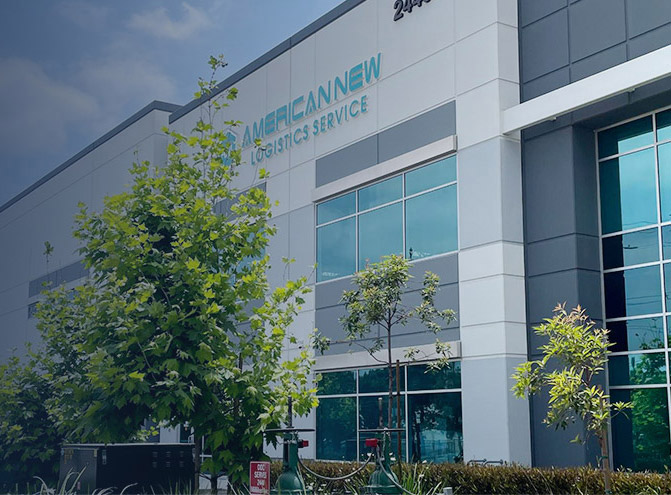
ANL's China-to-U.S. logistics operation can coordinate ocean freight, customs clearance, U.S. warehouse staging and final delivery through one logistics plan. The relevant service details are available through AMERICAN NEW LOGISTICS.
What Is the Safest Way to Evaluate an Imported Pet Feeder Shipment?
Do not begin with the question, “How cheap can I ship this feeder?”
Begin with the product.
A Wi-Fi feeder with a camera, battery and food-contact bowl is not operationally equivalent to a simple gravity feeder. The agencies involved can differ. The documents can differ. The HTS analysis can differ. The transportation requirements can differ.
Then calculate the entire landed cost.
For the documented ANL 2026 shipment, the physical cargo was 720 units, 42 CBM and 840 kg. Those numbers provide a useful reference point for modeling, but they should not be copied into another shipment's quotation. Actual cost depends on origin, destination, season, container utilization, product value, duty treatment, customs requirements and final-mile arrangements.
The compliance side has also changed in 2026. CPSC's imported-product eFiling requirements became effective July 8, 2026 for covered regulated consumer products. That means importers should treat compliance data as part of the pre-shipment workflow rather than paperwork to solve after arrival.
For an imported pet feeder, the most useful risk assessment therefore has four layers:
| Layer | Main Question | Output |
|---|---|---|
| Product | What exactly is being imported? | Technical product profile |
| Compliance | Which requirements actually apply? | Compliance checklist |
| Customs | How should the product be entered? | HTS + entry documents |
| Logistics | How does it reach the U.S. buyer or FBA? | FCL/LCL/air + U.S. delivery plan |
Before booking an imported pet feeder shipment, review the product configuration, applicable compliance requirements, HTS classification, document consistency and U.S. delivery plan together.
Frequently Asked Questions
1.Does every pet feeder need FCC certification?
No. FCC review is relevant when the product contains an RF function that falls under FCC equipment authorization requirements. A basic feeder without wireless functionality is not automatically treated the same way as a Wi-Fi feeder.
2.Does every imported pet feeder need CPSC eFiling?
No. The eFiling requirement applies to imported consumer products that are subject to CPSC certification requirements. The product's applicable safety rules must be identified first.
3.Is a pet feeder with a food-contact bowl automatically an FDA-regulated product?
Not necessarily. The food-contact material and intended use should be reviewed under the applicable FDA framework. Do not automatically treat the complete electronic feeder as imported pet food.
References
- · U.S. Customs and Border Protection — Commercial Invoice Requirements: https://www.help.cbp.gov/s/article/Article-1175?language=en_US
- · U.S. Consumer Product Safety Commission — Mandatory eFiling Announcement, July 8, 2026: https://www.cpsc.gov/Newsroom/News-Releases/2026/CPSC-Implements-Mandatory-eFiling-for-Certificates-of-Compliance-Targeting-Dangerous-Foreign-Imports
- · U.S. Consumer Product Safety Commission — Certificates of Compliance and eFiling: https://www.cpsc.gov/Business--Manufacturing/Business-Education/Business-Guidance/Certificates
- · U.S. Consumer Product Safety Commission — eFiling FAQ: https://www.cpsc.gov/FAQ/eFiling-Frequently-Asked-Questions-FAQ
- · Federal Communications Commission — EAS Equipment Authorization: https://opendata.fcc.gov/Engineering-Technology/EAS-Equipment-Authorization-Grantee-Registrations/3b3k-34jp
- · U.S. Food and Drug Administration — Food Contact Substances: https://www.fda.gov/food/food-packaging-other-substances-come-contact-food-information-consumers/understanding-how-fda-regulates-substances-come-contact-food
- · U.S. Food and Drug Administration — Animal Foods & Feeds: https://www.fda.gov/animal-food-feeds
- · AMERICAN NEW LOGISTICS — How to Export Pet Electronics to USA: https://en.anl-cn.com/newsdetail/88.html
- · AMERICAN NEW LOGISTICS — Pet Industry Niche Markets Guide: https://en.anl-cn.com/newsdetail/28.html
This article was compiled with AI assistance to gather industry data, and then manually reviewed, revised, and finalized by ANL specialist.