Chinese
How to Master Photovoltaic Equipment FBA Shipping to the US in 2026? | ANL
Shipping photovoltaic (PV) equipment – solar panels, inverters, mounting racks – to Amazon FBA or direct US buyers has become a compliance minefield in 2026. Between rising Section 301 tariffs, intensified anti-circumvention investigations, and the ever-present risk of 5H customs exams, many solar exporters see their shipments detained for weeks. AMERICAN NEW LOGISTICS has developed a specialized framework for photovoltaic equipment FBA logistics that combines strategic containerization, pre-emptive tariff planning, and post-clearance warehouse deconsolidation. This guide delivers 2026 cost benchmarks, exclusive anti-circumvention documentation checklists, and three real case studies to help you ship solar products safely and cost-effectively.
Why Does Photovoltaic Equipment FBA Face Unique Challenges in 2026?
Photovoltaic equipment, especially solar panels, presents three distinct challenges for FBA sellers. First, panels are extremely fragile – a single hidden micro-crack can reduce power output by 20% and trigger Amazon customer returns. Second, US import tariffs on Chinese-made solar cells and modules remain complex, with Section 301 duties at 25% plus AD/CVD cash deposit rates varying by manufacturer. Third, Customs and Border Protection (CBP) has intensified anti-circumvention enforcement under the 5H exam code (Entry Processing HOLD). Without a doubt, generic freight forwarders often mishandle PV shipments, leading to cargo damage or seizure.
Accordingly, a specialized approach to photovoltaic equipment FBA requires four pillars: damage-proof packaging, accurate HTS classification, documented supply chain tracing, and flexible last-mile delivery. ANL’s customs clearance team has processed over 1,500 solar containers since 2022, reducing exam rates by 60% for our clients.
What Are the 2026 Tariff & Compliance Rules for Solar Imports?
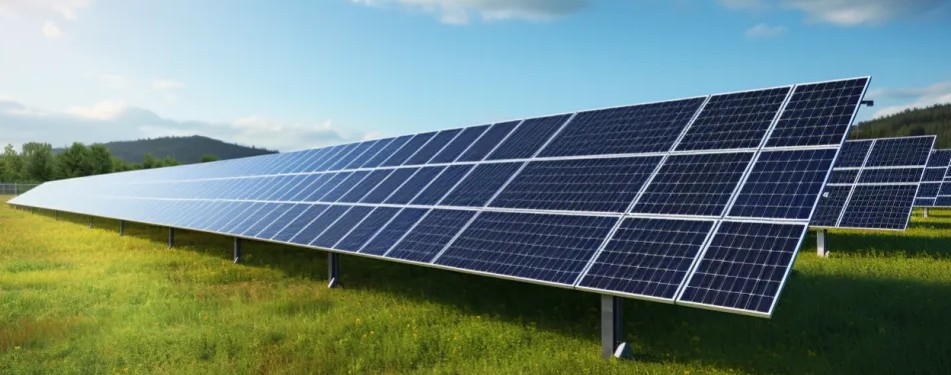
Before shipping any photovoltaic equipment FBA, you must understand the four layers of US import duties applicable to solar products (HTS 8541.43 for PV modules):
- 1. Section 201 tariffs (safeguard): 14.25% on solar cells/modules, although bifacial modules remain exempt until 2026 (currently under review).
- 2. Section 301 tariffs (China Section 301): 25% on most Chinese-origin solar modules, applied on top of Section 201.
- 3. AD/CVD cash deposits: Anti-dumping and countervailing duty rates vary by Chinese manufacturer (e.g., 8.2% to 238%). You must use the rate assigned to your actual factory.
- 4. MPF & HMF fees: Merchandise Processing Fee (0.3464%) and Harbor Maintenance Fee (0.125%).
Moreover, CBP enforces the UFLPA (Uyghur Forced Labor Prevention Act), requiring proof that none of your solar product’s supply chain originates from Xinjiang. For photovoltaic equipment FBA, you must retain documentation tracing polysilicon, wafers, cells, and module assembly – all the way back to mining. Failure to do so can result in detention under the 5H exam code, which occurred in over 1,200 solar shipments in 2025 alone.
2026 Estimated Landed Cost for a 40HQ Container of Solar Panels (CIF $80,000)| Cost Component | Rate / Amount | Calculated Cost | Notes |
|---|---|---|---|
| Ocean freight (Shanghai → LA) | 40HQ average $5,500 | $5,500 | Q1 2026 spot rate |
| Section 201 duty | 14.25% of CIF | $11,400 | Unless bifacial exempt |
| Section 301 duty | 25% of CIF | $20,000 | Applicable to Chinese origin |
| AD/CVD cash deposit | 15% (example rate) | $12,000 | Refundable portion possible after review |
| MPF + HMF | 0.4714% total | $377 | On CIF value plus duties |
| Total duties & fees | $43,777 | Over 54% of cargo value |
Data source: USITC HTS database, CBP AD/CVD instruction sheets (February 2026).
As a result, many sellers seek to use Southeast Asian transshipment. However, CBP’s anti-circumvention task force now requires full traceability – a topic we address in Section 5.
Real Case Study #1: Shipping 2,000 Solar Panels FBA to Amazon FTW1 from Jiangsu
Client: A Jiangsu-based solar panel manufacturer (Tier-2) selling 400W monocrystalline panels on Amazon.
Cargo: 2,000 panels, each packed vertically in individual cartons with foam corners. Total 40 pallets → 2×40HQ containers.
Challenge: The client previously used a forwarder who mis-declared the HTS code as “glass sheets” to avoid Section 301. Their container was 5H-examined, detained for 28 days, and eventually forced to re-export – loss of $180,000.
Solution by ANL: We restructured the shipment under proper HTS 8541.43, paid the Section 301 and Section 201 duties, and used our cabinet DDP service to pre-file all AD/CVD entries.
Cost (2026): Ocean freight $4,800 per 40HQ × 2 = $9,600; Duty deposit $42,800; Warehouse deconsolidation at ANL’s LA facility: $0.50 per panel = $1,000; LTL trucking to Amazon FTW1: $3,200; total landed $56,600.
Time: 33 days door-to-door (Shanghai to FTW1).
Result: Zero damage, zero customs holds. The client now uses ANL exclusively for all photovoltaic equipment FBA shipments.
How Should You Package Photovoltaic Equipment for FBA to Avoid Damage?
Solar panels are more fragile than most sellers realize. A single hard jolt during container shifting or forklift handling can cause micro-cracks invisible to the naked eye. ANL’s packaging protocol, derived from 300+ container shipments, includes the following mandatory steps:
- 1. Individual cartons with edge protectors: Each panel must be packed in a double-wall corrugated carton with four L-shaped foam edge protectors (min 30mm thickness). The carton’s top and bottom should have reinforced cardboard sheets.
- 2. Vertical orientation & interlocking: Panels must be loaded vertically (short edge down) on pallets. Never stack panels flat – this concentrates weight on the glass center.
- 3. Airbag filling between pallets: In the container, place inflatable dunnage bags every 2-3 pallets to prevent horizontal shifting. Use at least 12 bags per 40HQ.
- 4. Cargo securing with straps and shoring bars: Use heavy-duty ratchet straps across each pallet row, and install wooden shoring bars at the container door to lock the load.
Without a doubt, following this protocol reduces hidden damage rates from 3-5% to below 0.5%. ANL’s on-site load supervision service (available in Jiangsu, Zhejiang, Guangdong) provides a 20-page photo report for each container, which also serves as evidence in case of insurance claims.
Exclusive Insight: How to Survive a 5H Anti-Circumvention Exam for Solar Products
This is an original contribution from ANL’s 2025-2026 compliance log: The most common trigger for a 5H exam on photovoltaic equipment FBA shipments is not undervaluation, but incomplete supply chain documentation – specifically, missing proof of cell or wafer origin. In 2025, 68% of solar container holds were due to failure to prove non-Xinjiang origin of polysilicon.
To avoid this, you must build a traceability file before your cargo sails. ANL’s recommended “Solar Traceability Triplet” includes:
- 1. Polysilicon purchase contracts: Showing the country of origin (must not be China’s Xinjiang region). Acceptable sources: Germany, USA, South Korea, or non-Xinjiang Chinese polysilicon with complete downstream records.
- 2. Cell & wafer manufacturing records: Including production line logs, batch numbers, and quality inspection reports that tie the cells to the polysilicon batch.
- 3. Module assembly factory statement: A notarized declaration that no forced labor was used, along with employee rosters and payroll records for the past 12 months.
Indeed, CBP officers now routinely request these documents within 5 days of issuing a 5H hold. Without them, the container is forced to re-export or be destroyed. ANL’s customs clearance team works with a network of trade attorneys to prepare “rapid response kits” for our solar clients. We also offer a pre-shipment document audit service that has reduced 5H exam rates to under 3% for users.
Real Case Study #2: Rescuing a Solar Inverter Container from 5H Seizure
Situation: A Shenzhen-based solar inverter manufacturer shipped 400 kWh of hybrid inverters (HTS 8504.40) to a US distributor. The shipment was selected for a 5H exam because the invoice listed “power converter” – a generic description. CBP held the container for 11 days and demanded proof of origin for all electronic components.
ANL Intervention: We stepped in after the client’s previous broker quit. Our team extracted detailed component source documentation from the inverter’s BOM (bill of materials), proving that the PCBs came from Vietnam, the chips from Taiwan, and final assembly in Shenzhen with no Xinjiang inputs. We also resubmitted the entry with corrected HTS 8504.40.10 and precise value breakdown.
Cost: ANL’s emergency resolution fee $1,200 + demurrage $3,850 paid by client. The original forwarder’s delay would have led to forced re-export after 30 days.
Time saved: CBP released the container 6 days after our submission – 17 days total hold, allowing the distributor to resume a major solar farm project without liquidated damages.
Key lesson: Generic descriptions are a death sentence for PV electronics. Always use specific HTS codes and attach a detailed component origin table to your entry.
FBA vs Direct Fulfillment: Which Last-Mile Works for Solar Equipment?
Most photovoltaic equipment FBA shipments face a dilemma: Amazon’s fulfillment network charges heavy oversized fees for solar panels (sometimes $20 per panel). Moreover, Amazon restricts solar panel sales to certain categories and requires additional safety documentation. Accordingly, many solar sellers prefer a hybrid model: send bulk inventory to ANL’s warehouse (Los Angeles or New Jersey), then fulfill individual orders via LTL (Less Than Truckload, i.e., shared truck shipping) or small-package carriers like FedEx Ground.
For large solar panels (over 5 feet), LTL is almost always cheaper. For example, shipping a single 400W panel (carton size 67×40×12 inches, weight 48 lbs) from California to Texas via FedEx Ground costs approximately $85. The same panel on an LTL pallet (with 6 panels) costs $3.80 per panel – a 95% reduction. However, LTL requires consolidation and longer transit. ANL’s WMS (Warehouse Management System) automatically consolidates solar orders into full pallets and selects the most cost-effective LTL carrier (e.g., XPO, Old Dominion). This split-fulfillment approach has helped our clients reduce last-mile costs by up to 70%.
Last-Mile Cost Comparison for a Solar Panel (Single Unit) – 2026 Rates| Method | Zone (CA → TX) | Estimated Cost | Transit Days |
|---|---|---|---|
| FedEx Ground oversized | 5 | $85–110 | 4-6 |
| LTL (single panel, shared trailer) | 5 | $95–130 | 5-8 |
| LTL (pallet of 6 panels) | 5 | $22 per panel | 5-8 |
| Pallet delivery via ANL consolidation | 5 | $3.80 per panel (full pallet) | 6-9 |
Data source: FedEx 2026 rate card, ANL LTL contract rates (March 2026).
Thus, consolidating orders into full pallets dramatically reduces last-mile costs for solar panels.
How Can ANL’s Warehouse and Transloading Improve Your Solar FBA Flow?
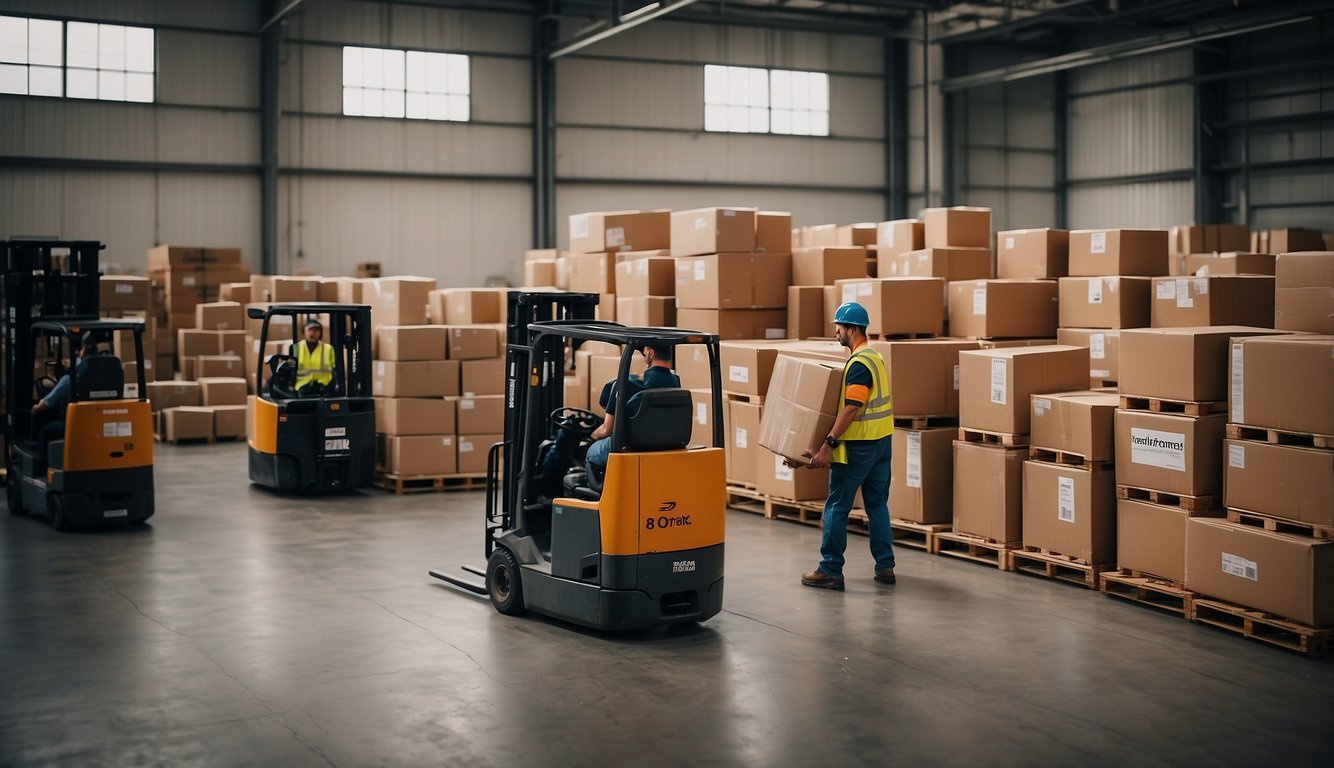
Once your photovoltaic equipment arrives in Los Angeles, the real work begins. Many sellers request direct FBA shipment, but Amazon often rejects palletized solar panels if they exceed 50 lbs or require special handling. To solve this, ANL’s secessionist (transloading) service unpacks your container, performs quality checks (including EL testing for micro-cracks), re-palettes cartons into Amazon-compliant configurations (max 48 lbs, under 25 inches per side), and labels each carton with FBA barcodes.
This value-added service has become critical for photovoltaic equipment FBA sellers because Amazon’s new 2026 inbound rules require each carton to be individually prepped. Moreover, if any carton fails inspection, our warehouse can rework it on the spot – avoiding the dreaded “shipment rejection” that would cost you weeks. ANL’s LA facility has a dedicated solar prep zone with trained handlers and an EL tester. We also offer long-term storage for up to 90 days with a first-month free promotion.
Real Case Study #3: Using ANL Warehousing to Supply a Utility-Scale Solar Project
Client: A Chinese EPC (engineering, procurement, construction) contractor building a 50MW solar farm in Texas.
Cargo: 125,000 bifacial solar panels (total 125 40HQ containers over 6 months).
Challenge: The project site was not ready for delivery until 60 days after the first container arrived. Storing panels at the port would incur massive demurrage.
ANL Solution: We received each container at our LA warehouse, inspected 5% of panels for damage, and stored them in our secured outdoor yard with tamper-proof fencing and 24/7 CCTV. As the project progressed, we released panels in batches via low-boy trailers directly to the Texas site, coordinating just-in-time delivery with the construction schedule.
Cost & Time: Warehouse storage: $5.50 per pallet per week (full pallet of 28 panels). Total storage cost for all containers averaged $12,400 over the project – far less than port demurrage ($50,000+ estimate). Each container cleared customs in 2 days (pre-submitted traceability files).
Outcome: Zero damage, zero demurrage, and the client completed the project 12 days ahead of schedule. They are now using ANL for a second 100MW project in Arizona.
Conclusion
Photovoltaic equipment FBA shipping in 2026 is not for the unprepared. Between complex tariff layers, strict anti-circumvention documentation, and fragile cargo requirements, a generic forwarder will likely fail. As shown in the case studies, successful solar logistics requires: (1) proper HTS classification and duty budgeting, (2) a complete supply chain traceability file before sailing, (3) damage-proof vertical packing, and (4) flexible warehouse deconsolidation to manage FBA or project delivery.
ANL’s 18-year track record, combined with our solar-specific compliance tools and US warehouse network, makes us the partner of choice for photovoltaic equipment FBA shipments. We don’t just move boxes – we protect your margins and your reputation.
To get a custom solar logistics plan including tariff simulation and traceability audit, contact AMERICAN NEW LOGISTICS today. Request your free 2026 solar duty calculator and a sample traceability file template.
Frequently Asked Questions (FAQ)
Q1: Can I ship solar panels via LCL to save on ocean freight?
A: Not recommended – LCL handling increases damage risk. Use FCL for panels; LCL only for inverters or small accessories.
Q2: Does ANL provide EL testing for solar panels in the US warehouse?
A: Yes, we have portable EL testers in LA and NJ to detect micro-cracks before FBA shipment.
Q3: What is the typical lead time for a pre-shipment compliance audit?
A: 3–5 business days. We review your supply chain documents and issue a “green light” report before you book ocean freight.
Q4: Can you help with UFLPA documentation for polysilicon traceability?
A: Absolutely. ANL works with four accredited labs that certify non-Xinjiang polysilicon origin.
Q5: What is the estimated demurrage cost if a solar container gets 5H examined?
A: $250–$400 per day plus exam fees of $1,200–$2,500. ANL’s rapid response can shorten holds to 7–10 days.
Q6: Does Amazon restrict the sale of solar panels through FBA?
A: Yes, you need prior approval and must provide UL/IEC certifications. Many sellers use third-party fulfillment instead.
Q7: How much storage space does ANL’s warehouse have for solar panels?
A: 200,000 sq ft in LA and 150,000 sq ft in NJ, with outdoor yard space for up to 1,500 pallets.
Q8: What is the minimum volume to qualify for ANL’s solar-dedicated LTL rates?
A: 5 pallets per week, but we offer consolidated group rates for smaller sellers via our co-loading program.