AMERICAN NEW LOGISTICS It is an international logistics comprehensive service provider registered in Los Angeles, California, USA
 Chinese

Wayfair Seller Logistics: CastleGate, WDN, or 3PL – What Actually Works?Release time:2026-08-05 views:1166
Wayfair offers sellers three logistics paths: CastleGate official warehousing, WDN (Wayfair Delivery Network) pickup from your 3PL, or independent fulfillment through a third-party warehouse. The choice determines your cost structure, chargeback exposure, and delivery speed. CastleGate gives you prime search placement and 97% two-day coverage but carries high storage costs. WDN keeps you out of CastleGate's warehouse while still using Wayfair's trucking network – but your warehouse must hit 98.5% 48-hour fulfillment or face penalties. Independent fulfillment offers flexibility but puts the entire delivery risk on you. The right choice depends on your product's turnover, margin, and whether you can stomach a chargeback that wipes out a month's profit on a single order.
Wayfair is not Amazon. The logistics rules are different, the penalties are different, and the margin math works differently. This guide is based on real shipments, real chargebacks, and real decisions we've helped sellers make.
Wayfair uses a 3PL (third-party logistics) core operating model. You store the inventory, you manage the warehouse, and Wayfair handles the final delivery. The platform does not hold your inventory the way Amazon does.
This means you are responsible for the operational execution. Wayfair sets the rules – 48-hour fulfillment windows, routing guide compliance, packaging standards – and enforces them with chargebacks. Get it right, and you get access to 2,100+ million active customers with 80%+ repeat order rates. Get it wrong, and a single chargeback can erase the profit from five orders.
The 2026 landscape has shifted. Wayfair expanded CastleGate, added consolidated delivery, automated pre-delivery calls, and introduced new Asia Logistics services. Sellers who understand these changes are positioning themselves ahead of competitors who are still treating Wayfair like Amazon.
CastleGate is Wayfair's end-to-end logistics service. You ship your container to a CastleGate fulfillment center. Wayfair handles receiving, storage, picking, packing, and delivery. Your inventory sits in Wayfair's warehouse, and Wayfair owns the fulfillment execution.
What you get:
What it costs:
Storage fees are tiered and increase with time. The 90-day free storage window is real – but after that, costs climb. Products with annual turnover of 4+ turns essentially achieve zero storage cost. Slow-moving inventory gets expensive fast. Wayfair's CastleGate pricing is not public in a simple rate card, but industry sources indicate storage costs escalate significantly beyond the 90-day window, with the highest rates hitting during Q4 peak season. For a 40HQ container of furniture, monthly storage costs can run $800-$2,500+ depending on cube and velocity.
Container SPO (Supplier Product Order) requirements: Inbound shipments to CastleGate must follow strict rules – UCC labels, specific pallet dimensions, and appointment scheduling. Miss a detail, and your container gets rejected at the gate.
New in 2026: CastleGate's Asia Logistics service now offers container consolidation with document credits – approximately $200 savings per 65 CBM container. 98% of cargo now ships from the warehouse within 7 days of receipt.
You store inventory in your own 3PL warehouse. When an order comes in, your warehouse picks, packs, and palletizes the order. Wayfair's trucking network (WDN) or a designated LTL carrier (FedEx Freight, XPO) picks up the shipment and delivers it to the customer.
What you get:
What it costs:
Your 3PL charges storage and handling fees. For a 40HQ container of furniture (approx. 60-70 CBM), monthly storage at a third-party warehouse typically runs $400-$1,200 depending on location and facility quality. Inbound receiving: $300-$700 per container. Outbound handling: $25-$75 per order plus palletizing.
The risk: Your warehouse must hit Wayfair's 48-hour fulfillment window. If the order is not ready when the WDN truck arrives, you get a chargeback – typically $50-$150 per occurrence. Repeated failures can lead to account restrictions.
Your warehouse must also follow Wayfair's routing guide precisely – carton requirements, pallet rules (48"×40", max 72" height), label formats, and ASN alignment. Errors trigger chargebacks that can range from $25 to $500+ per shipment.
You store inventory in your 3PL and arrange your own shipping – either through your own carrier account or through your 3PL's negotiated rates. Wayfair is not involved in the carrier selection or execution.
What you get:
What it costs:
This is the most variable option. LTL rates for furniture-sized shipments typically range from $150 to $600 per order depending on weight, dimensions, and destination zone. You will not get Wayfair's negotiated rates – but you may get better service and fewer scheduling issues.
The risk: Wayfair does not cover delivery damage when you use an independent carrier. If the customer receives damaged goods, you absorb the loss – both the product cost and the refund. Wayfair's chargeback policies still apply for fulfillment errors, but delivery damage is your problem.
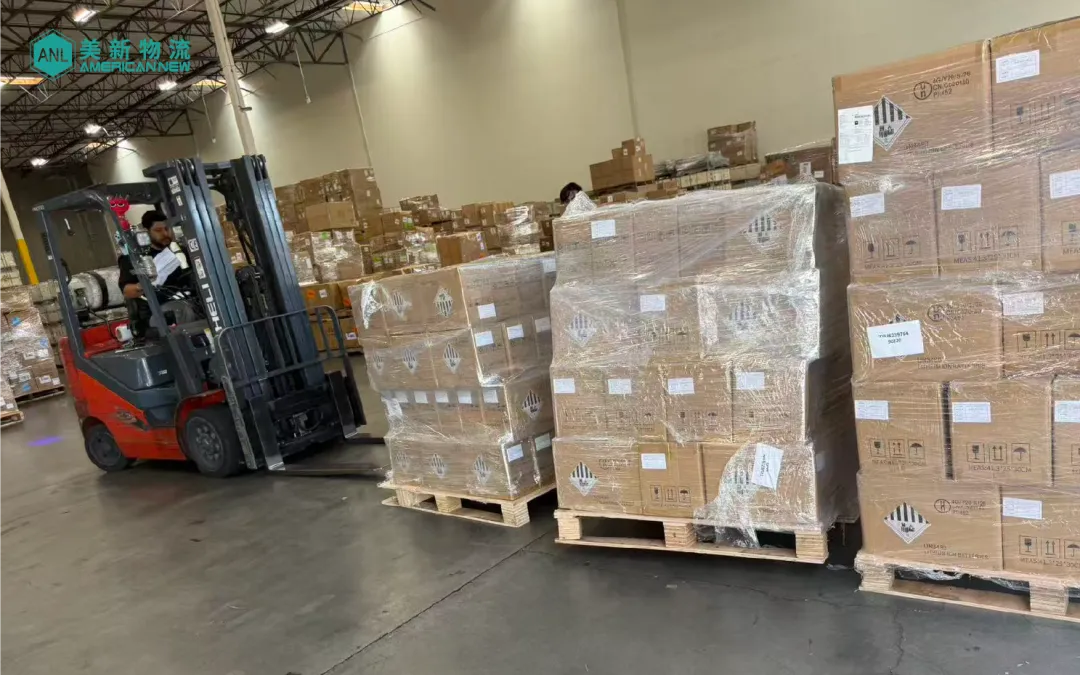
Here is the cost math for a typical furniture shipment based on ANL's experience with clients using CastleGate in 2025-2026.
Sample: 40HQ container of bedroom furniture, 65 CBM, FOB value $25,000
Inbound costs to CastleGate:
Storage costs (after 90-day free period):
CastleGate's tiered storage structure means costs escalate with time. At 91-120 days, expect $0.50-$1.00 per cubic foot per month. A 65 CBM container (approx. 2,295 cubic feet) would cost $1,150-$2,295 per month at this stage. At 121+ days, rates can double. For a product with 30-day turnover, CastleGate storage is effectively free. For a product with 120-day turnover, storage costs can eat 5-10% of FOB value.
The turnover math: Products with annual turnover of 4+ turns (90 days or less in storage) benefit from CastleGate's 90-day free storage and higher search placement. Products with slower turnover are better suited for a 3PL with flat-rate storage.
Chargebacks are Wayfair's enforcement mechanism. When you fail to meet the platform's fulfillment standards, Wayfair deducts money from your payment. These are not warnings – they are automatic deductions.
Common chargeback triggers and typical costs:
One chargeback can erase the profit from several orders. For a furniture seller with 30% margins, a $200 chargeback requires $667 in additional sales just to break even on that transaction.
Wayfair's routing guide is the rulebook for how shipments must be prepared, labeled, and scheduled. It covers:
Wayfair's receiving system is automated. Cartons are scanned, data is validated, and mismatches flag immediately. When a mismatch occurs, the system generates a chargeback. There is no human review – the system decides, and the deduction happens.
This is why operational precision matters. A warehouse that tracks inventory on paper instead of with a WMS will struggle with Wayfair compliance. A warehouse that cannot generate the correct label format will generate chargebacks on every shipment.
Here is the decision framework based on what we have seen work for ANL clients.
| Factor | CastleGate | 3PL + WDN | 3PL + Independent |
|---|---|---|---|
| Inventory turnover | 4+ turns/year | Any | Any |
| Product margin | 40%+ | 30%+ | 35%+ |
| Search ranking boost | Highest | Medium | Lowest |
| Delivery damage liability | Wayfair covers | Shared | Seller bears |
| Storage cost risk | High if slow | Low | Low |
| Operational complexity | Medium | High | Medium |
Wayfair has made several logistics changes in 2026 that affect seller decisions.
CastleGate Asia Logistics upgrade: The new Asia consolidation service reduces transit times and costs. Document credits of approximately $0.09 per cubic foot offset administrative fees – roughly $200 savings per 65 CBM container.
90-day free storage confirmed through 2026: The policy remains unchanged for all inbound CastleGate inventory. This is a significant benefit for fast-turning products.
Multi-channel fulfillment expansion: Wayfair now supports FBA MCF (Amazon Multi-Channel Fulfillment) for small items – single unit weight ≤20 lb. This gives sellers with Amazon inventory a new Wayfair fulfillment option.
Consolidated delivery and AI pre-delivery calls: Wayfair introduced new delivery options and automated customer notifications to reduce last-mile costs and failed deliveries.
CastleGate price card update (July 1, 2026): New pricing took effect in July 2026. Sellers should review the updated rate card for their specific product categories.
Beyond storage and shipping, there are costs that catch sellers off guard.
Chargebacks: As detailed above, these can add up quickly. A $50 chargeback per order on 100 orders is $5,000 in lost margin.
Packaging compliance costs: Wayfair's packaging standards may require upgrades to your existing packaging – stronger cartons, specific labeling, additional corner protectors. These costs are often not factored into product pricing.
Warehouse compliance overhead: Running a Wayfair-compliant warehouse requires systems and training. A basic WMS that can generate UCC-128 labels and file ASNs is non-negotiable. Labor costs for compliance checks add up.
Demurrage and detention: If your CastleGate appointment is delayed or your container sits at the port beyond free time, demurrage charges apply. At $100-$300 per day, a week-long delay adds $700-$2,100.
Returns processing: Wayfair's return rate for furniture is higher than for small consumer goods – typically 5-15% depending on the category. Returns must be processed, inspected, and either restocked or disposed of. This is a cost that many sellers do not model into their margin calculations.
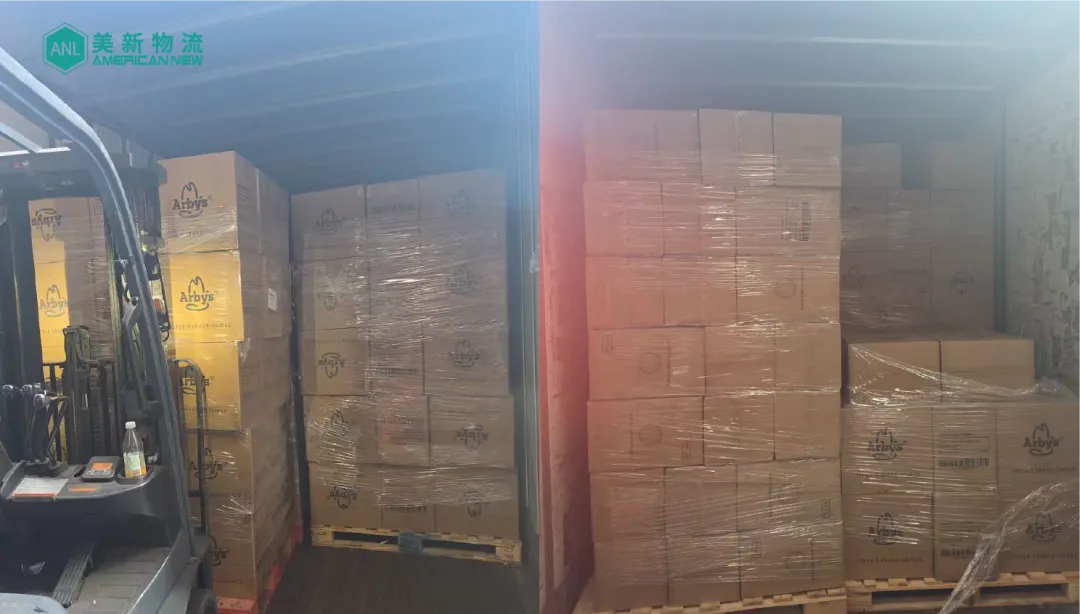
Wayfair requires 98.5% of orders to be fulfilled within 48 hours. This is a hard metric with real consequences.
Here is what 48 hours means operationally:
This requires a warehouse that operates on a 24-hour cycle, not a 48-hour cycle. Orders received on Monday must be ready for Tuesday pickup. Orders received on Friday must be ready for Monday pickup (weekends count).
For a 3PL handling Wayfair orders, this means dedicated staff, real-time inventory visibility, and automated label generation. A warehouse running on spreadsheets and manual processes cannot sustain 98.5% compliance.
Wayfair logistics is not a one-size-fits-all decision. CastleGate offers the best search placement and fastest delivery, but only if your products turn over quickly enough to justify the storage costs. 3PL + WDN gives you flexibility and lower storage costs, but requires operational precision to avoid chargebacks. 3PL + independent carrier gives you complete control but puts all delivery risk on you.
The right choice depends on your product's turnover, margin, and your warehouse's ability to meet Wayfair's compliance standards. For many sellers, the optimal strategy is hybrid: CastleGate for high-turnover SKUs, 3PL + WDN for everything else.
At AMERICAN NEW LOGISTICS, we are a Wayfair Official Logistics Provider and Amazon SPN carrier. We operate warehouses in Los Angeles, Long Beach, Savannah, and New Jersey with Wayfair-compliant systems – UCC-128 label generation, ASN filing, palletization, and 48-hour fulfillment capability. We also offer CastleGate inbound services, including container de-vanning, palletizing, and appointment scheduling.
If you are evaluating Wayfair logistics options, we offer a free logistics assessment that includes a cost comparison between CastleGate and 3PL models, a warehouse compliance audit, and a tailored fulfillment recommendation.
CastleGate is Wayfair's warehouse. WDN is Wayfair's trucking network that picks up from your 3PL.
A deduction from your payment when you fail to meet fulfillment or routing requirements – typically $50-$500 per occurrence.
Yes, unless you use CastleGate. Wayfair requires US-based inventory for all fulfillment models.
Wayfair's automated receiving system will reject the shipment and issue a chargeback – typically $25-$500.
Yes, but only for small items ≤20 lb via Wayfair's FBA MCF integration.
Yes for fast-turning products (4+ turns/year). No for slow-moving inventory where storage costs eat margins.
Hot News