Chinese
How Can Cross-border Logistics for Large Cargo Protect Your FBA Profits? | ANL
Selling oversized furniture, fitness equipment, or industrial machinery through Amazon FBA or Wayfair comes with a daunting reality—one damaged pallet or misclassified container can erase your entire profit margin. Whether it is an outdoor grill stuck at customs for incorrect HS code declarations or a heavy machinery shipment delayed by unexpected demurrage fees, the risks multiply as cargo dimensions increase. At AMERICAN NEW LOGISTICS, we have spent over 18 years mastering the intricate balance of compliance, cost control, and delivery reliability for cross-border logistics for large cargo. This comprehensive guide will walk you through proven strategies to streamline your supply chain, reduce hidden fees, and scale confidently in 2026.
What Makes Cross-border Logistics for Large Cargo So Challenging in 2026?
Shipping large cargo internationally—especially from China to the United States—presents a distinct set of hurdles that smaller parcel logistics do not encounter. The dimensional weight (DIM weight) calculation alone can drastically alter shipping costs. For a typical piece of furniture measuring 180cm x 80cm x 75cm, the DIM weight formula (length × width × height ÷ 6000) yields 180kg, whereas actual weight might be only 75kg. Carriers charge based on the higher figure, meaning lightweight but bulky items become disproportionately expensive to ship. Consequently, effective cross-border logistics for large cargo requires precise cube optimization and strategic mode selection—either Full Container Load (FCL) for maximum control or Less-than-Container Load (LCL) consolidation for smaller volumes.
Moreover, U.S. regulatory changes in 2026 have intensified the complexity. In August 2025, the United States eliminated the de minimis exemption for low-value shipments under $800 originating from China and Hong Kong, ending the duty-free lifeline that many e-commerce sellers relied upon. As a result, previously exempt large cargo shipments—such as furniture sets and home gym equipment—now face full customs duties, federal excise taxes, and state sales taxes. This shift has forced sellers to adopt DDP shipping to manage upfront tariff costs and avoid unexpected charges upon delivery. Without a reliable logistics partner well-versed in customs clearance DDP and HS code pre-classification, a single 40HQ container can incur thousands of dollars in surprise fees.
Why Does ANL Specialize in FBA Headhaul and Oversized Cargo Shipping?

Many logistics providers shy away from heavy and bulky shipments because they require specialized equipment, stronger packaging, and deeper compliance knowledge. For example, Amazon FBA imposes strict limitations on oversized goods: any single box over 50 lbs requires “Team Lift” labels on at least five sides, and boxes exceeding 150 lbs or 108 inches in length are outright rejected by Amazon fulfillment centers. Furthermore, Amazon’s 2026 policy update has discontinued pre-staging services, meaning that all cargo must arrive at warehouses already fully palletized and labeled—otherwise, the entire shipment may be turned away.
Additionally, platform-specific requirements vary dramatically. While Wayfair accepts bulk furniture deliveries through its CastleGate network, Walmart Marketplace demands strict appointment-based scheduling for oversized items. Meanwhile, TikTok Shop sellers selling large electronics or home decor must navigate same-day dispatch windows that pressure logistics responsiveness. ANL addresses these diverging demands through platform-dedicated logistics solutions. As an FBA LCL/FCL headhaul specialist, we ensure that large cargo shipping meets each platform’s unique receiving standards, from Amazon’s fulfillment network to Wayfair’s CastleGate warehouses and beyond.
Our approach combines pre-shipment consulting with operational precision. We review your product dimensions, weight distribution, and packaging materials before cargo even leaves your factory. By identifying potential compliance issues early—such as insufficient pallet strength or missing hazmat declarations—we proactively reduce the risk of shipment holds or chargebacks. Indeed, integrating upstream planning into cross-border logistics for large cargo transforms compliance from a reactive burden into a strategic advantage.
Which Transportation Mode Best Suits Different Types of Large Cargo?
Selecting the right shipping mode depends on multiple variables: cargo size, delivery urgency, budget constraints, and final destination type (FBA warehouse vs. residential address). Below is a comparative analysis of the primary options for cross-border logistics for large cargo from China to the United States.
| Mode | Best For | Transit Time | Cost per CBM (Approx.) |
|---|---|---|---|
| FCL (40HQ Container) | Furniture, machinery, bulk inventory | 25–40 days | $110–$180 per CBM |
| LCL Consolidation | Mixed SKUs, smaller volumes (3-15 CBM) | 35–50 days | $150–$220 per CBM |
| Air Freight | Time-sensitive restocks, high-value small freight | 5–12 days | $6–$12 per kg |
| Express Courier | Urgent samples, emergency parts, ≤200kg | 3–7 days | $8–$15 per kg |
Note that LCL often involves higher per-unit costs because of consolidation and deconsolidation fees at origin and destination ports. FCL becomes more economical once your cargo exceeds approximately 18–20 CBM per container, as you pay a flat rate regardless of exact fill volume. Without a doubt, route optimization and consolidating shipments from multiple suppliers into a single container can dramatically reduce overall logistics spend. ANL’s freight consolidation strategies help sellers lower their landed cost per unit by maximizing container utilization and selecting optimal routing based on real-time rate benchmarks.
How Can You Prepare Large Cargo for FBA and E-commerce Platform Compliance?
Adhering to platform-specific receiving rules is non-negotiable. Amazon, Wayfair, Walmart, and TikTok Shop each publish rigorous guidelines covering pallet height, labeling placement, and carrier appointment windows. For cross-border logistics for large cargo, non-compliance often results in “problem report” notifications, rework fees, or even full shipment rejection. In 2026, Amazon has tightened its inbound requirements further, mandating that all cargo undergo palletization and labeling before arrival at any fulfillment center—refusing to accept any shipments requiring on-site preparation.
To avoid these costly disruptions, adopt a documented pre-shipment checklist:
-
- 1. Measure each carton three times to confirm dimensions (Amazon audits using volumetric scanners).
- 2. Apply Team Lift labels (≥50 lbs, ≤150 lbs) or Mechanical Lift labels (>100 lbs) on all applicable sides.
- 3. Ensure pallet height does not exceed 72 inches including pallet base.
- 4. Verify that no single package exceeds Amazon’s upper weight limit of 150 lbs.
- 5. Confirm that carrier appointment documents (ISA number for Amazon) match shipment details exactly.
Additionally, for cross-border logistics for large cargo sold through Wayfair or Walmart, the accuracy of the Advance Shipping Notice (ASN) is critical. Even a minor discrepancy in carton count triggers manual audits that delay inventory putaway by weeks. For example, a seller shipping 300 units of outdoor storage cabinets discovered that mislabeled cartons caused a two-week receiving delay during peak season, leading to stockouts and lost Black Friday revenue. Proactive ASN reconciliation—matching physical labels to digital files—prevents such operational pitfalls.
What Documents and Customs Procedures Are Required for DDP Clearance?
Clearing U.S. Customs for large cargo demands precise documentation and proactive classification. The primary required documents for U.S. inbound cross-border logistics for large cargo include:
-
- 1. Commercial Invoice (detailed product description, declared value, country of origin)
- 2. Packing List (carton count, weight per carton, dimensions)
- 3. Bill of Lading (Ocean) or Air Waybill (Air)
- 4. Entry Summary (CBP Form 7501) filed by your customs broker
- 5. Importer Security Filing (ISF) for ocean freight, submitted at least 24 hours before vessel loading
- 6. For DDP shipments: Power of Attorney (POA) authorizing broker to act as Importer of Record
Additionally, certain large cargo categories require specialized permits. Furniture made from regulated wood species necessitates Lacey Act declarations. Fitness equipment with electronic components may require FCC testing certificates. Industrial machinery often needs EPA engine compliance documentation. Failing to produce these on request can lead to exam holds costing $500–$2,000 in storage fees before release.
ANL’s DDP customs clearance service integrates H.S.Code pre-classification performed by an experienced legal team. With a documented 99.8% pre-classification accuracy rate, we ensure your cargo meets all Section 301 tariff requirements, antidumping verifications, and any new regulations emerging from shifting U.S.-China trade policies. By acting as your Importer of Record, we handle tariff prepayment, tax filing, and bond management, thus providing true door-to-door DDP peace of mind.
Can You Reduce Logistics Costs Without Sacrificing Delivery Speed?
Indeed, cost optimization is not about choosing the cheapest carrier—it is about matching service levels to specific business needs. Cross-border logistics for large cargo often presents opportunities to consolidate shipments, balance transportation modes, and renegotiate volume discounts.
According to industry data from early 2026, ocean FCL rates from Shanghai to Los Angeles have stabilized between $3,500 and $6,000 per 40ft container depending on timing and volume. Smaller sellers shipping partial containers pay a premium for LCL consolidation, which can be up to 40% more per CBM than FCL equivalents. Consequently, collaborating with other sellers to fill a full container significantly reduces per-unit logistics expense. Alternatively, air freight rates from major Chinese airports to the US West Coast range from $6–$12 per kilogram, offering speed at a premium of roughly 3–5 times ocean costs. For non-urgent inventory replenishment, ocean freight remains the most cost-effective backbone of cross-border logistics for large cargo.
Another practical strategy involves adjusting delivery appointment windows. Shipping to densely populated areas like Los Angeles or New Jersey often costs 20% less than rural destinations because carriers achieve higher density per route. However, Amazon’s FBA network distributes inventory across fulfillment centers based on customer proximity, sometimes forcing shipments to less accessible warehouses. We collaborate with sellers to forecast demand and align shipping schedules with FBA capacity offerings, thereby reducing last-mile surcharges.
What Are the Latest Tariff and Regulatory Changes Affecting Large Cargo in 2026?
The regulatory landscape for cross-border logistics for large cargo has transformed dramatically over the past 18 months. The elimination of the Section 321 de minimis exemption on August 29, 2025, eliminated duty-free entry for shipments under $800 originating from China and Hong Kong. Consequently, every large cargo shipment—whether valued at $500 or $50,000—now incurs customs duties, excise taxes, and state sales taxes. As a result, sellers have pivoted toward DDP shipping to embed all tariffs upfront and avoid consumer delivery refusals due to unexpected fees.
Additionally, 301 tariffs on Chinese goods remain in effect, with certain product categories facing rates exceeding 25% depending on HS code classification. However, positive signals emerged from May 2026 trade negotiations between U.S. and Chinese officials, where both sides agreed to initiate mutual tariff reductions worth at least $30 billion each, focusing on consumer electronics, home goods, and light industrial products. While full tariff relief is not immediate, businesses reliant on cross-border logistics for large cargo should monitor ongoing Section 301 list reviews and prepare adaptive pricing models.
Furthermore, bonded warehouse operators face stricter CBP oversight in 2026, requiring annual audits and real-time inventory reporting for deferred duty cargo. For sellers storing large cargo in U.S. warehouses before retail distribution, selecting a CBP-compliant warehouse such as ANL’s self-operated oversized warehouse ensures regulatory compliance while enabling flexible inventory management. Our warehouses accept returns, facilitate label exchanges, and support multi-platform self-pickup, all while providing 7 days of free storage to accommodate cargo transloading.
How Should Sellers Prepare Their Logistics for Peak Season Volatility?
Peak season in U.S. e-commerce—spanning August through December—places extraordinary strain on logistics networks. Cargo volumes surge 30%–50%, leading to port congestion, limited container availability, and delayed delivery windows. For cross-border logistics for large cargo, which requires more handling time and warehouse space than small parcels, peak season challenges multiply.
According to DHL’s 2025 peak season analysis, shifting tariffs, evolving consumer behavior, and new sourcing strategies shaped a leaner yet more agile logistics environment. Sellers who secured container bookings six to eight weeks in advance avoided the spot market price spikes seen during Q3 2025. Moreover, diversifying carrier relationships—using both contract rates and spot market options—helped mitigate capacity shortages. Additionally, air freight became a tactical tool for time-sensitive restocks when ocean delays threatened holiday availability.
To prepare your cross-border logistics for large cargo for the 2026 peak season:
-
- 1. Start container booking requests 8–10 weeks before expected ship dates.
- 2. Maintain safety stock in bonded warehouses near major US ports to buffer against delays.
- 3. Work with freight forwarders offering real-time visibility platforms to track cargo status.
- 4. Conduct HS code audits for all large cargo SKUs to ensure correct duty application.
- 5. Build contingency routing into your logistics plan (e.g., alternate ports or carriers).
At ANL, we integrate peak season readiness into our standard operating procedures. Our air freight solutions include annual fixed pallet storage and on-site emergency response for time-sensitive large cargo, ensuring your shipments do not get stuck in peak season backlogs.
Case Studies: Real-World Examples of Optimized Large Cargo Logistics
Case Study 1: Outdoor Grill Manufacturer Overcoming FBA Size Restrictions
A Chinese grill manufacturer based in Ningbo planned to launch a 72-inch stainless steel gas grill through Amazon FBA. The grill’s assembled dimensions exceeded Amazon’s oversized 108-inch length threshold for fulfillment center acceptance. Moreover, the grill’s weight of 165 lbs surpassed Amazon’s 150 lbs single-item limit.
Location: Ningbo, China → Amazon FBA center in Fontana, California
Cargo type: 500 units of large gas grills, each 183cm × 70cm × 60cm, 75kg
Shipping method: Three 40HQ FCL containers via ocean freight (Matson CLX service)
Solution: ANL redesigned packaging into two separate cartons per grill (main body + side shelves). Each carton stayed under 150 lbs and 108 inches. Pre-clearance secured grill-specific compliance for propane-related components.
Cost: $4,200 per 40HQ container (ocean DDP inclusive of tariffs and inland delivery)
Time: 32 days from Ningbo factory pickup to Fontana FBA check-in
Outcome: The seller avoided FBA rejection fees, reduced dimensional weight charges by 22%, and achieved Prime eligibility within 48 hours of warehouse receiving.
Case Study 2: Fitness Equipment Distributor Overcomes De Minimis Elimination
A Shanghai-based distributor of home gym equipment previously relied on de minimis exemption to ship individual fitness benches (value $450 each) direct to US customers. When the exemption ended in August 2025, the company faced a 25% tariff liability on every unit—a cost they had never budgeted for.
Location: Shanghai, China → Residential addresses across Texas and California
Cargo type: 2,000 folding weight benches, each 95cm × 45cm × 35cm, 32kg
Shipping method: LCL consolidation via ocean freight to Los Angeles port, then LTL delivery to end customers
Solution: ANL transitioned the client to DDP terms, pre-paying Section 301 tariffs and obtaining a customs bond. We consolidated weekly shipments into full 40HQ containers to lower per-unit ocean costs.
Cost: $180 per unit landed (including product, ocean, tariffs, and US last-mile)
Time: 28 days from Shanghai pickup to residential delivery in Texas
Outcome: Despite tariff increases, the client retained price competitiveness by absorbing only half the duty cost, while ANL’s consolidation reduced per-unit ocean expense by 31%.
Case Study 3: Industrial Machinery Seller Reduces Air Freight Spend
A Shenzhen manufacturer of industrial CNC routers needed urgent delivery of 12 units to a buyer in Chicago, but ocean transit would miss the buyer’s installation deadline. Air freight seemed the only option, yet standard air rates would triple the product cost.
Location: Shenzhen, China → Industrial facility near Chicago O‘Hare Airport
Cargo type: 12 CNC routers, each 210cm × 130cm × 160cm, 850kg
Shipping method: Part-charter air freight via cargo airline from Shenzhen to Chicago
Solution: ANL arranged a shared charter arrangement with two other machinery exporters, splitting the cost based on volume and achieving significant savings over express courier rates.
Cost: $8,400 total ($700 per router), compared to $18,000 for standard air freight quotes
Time: 8 days from Shenzhen pickup to Chicago delivery
Outcome: The seller met the buyer’s deadline, paid less than half of conventional air rates, and secured a repeat order for 50 units the following quarter.
How Does ANL’s Network of Self-Operated Warehouses Improve Last-Mile Delivery?
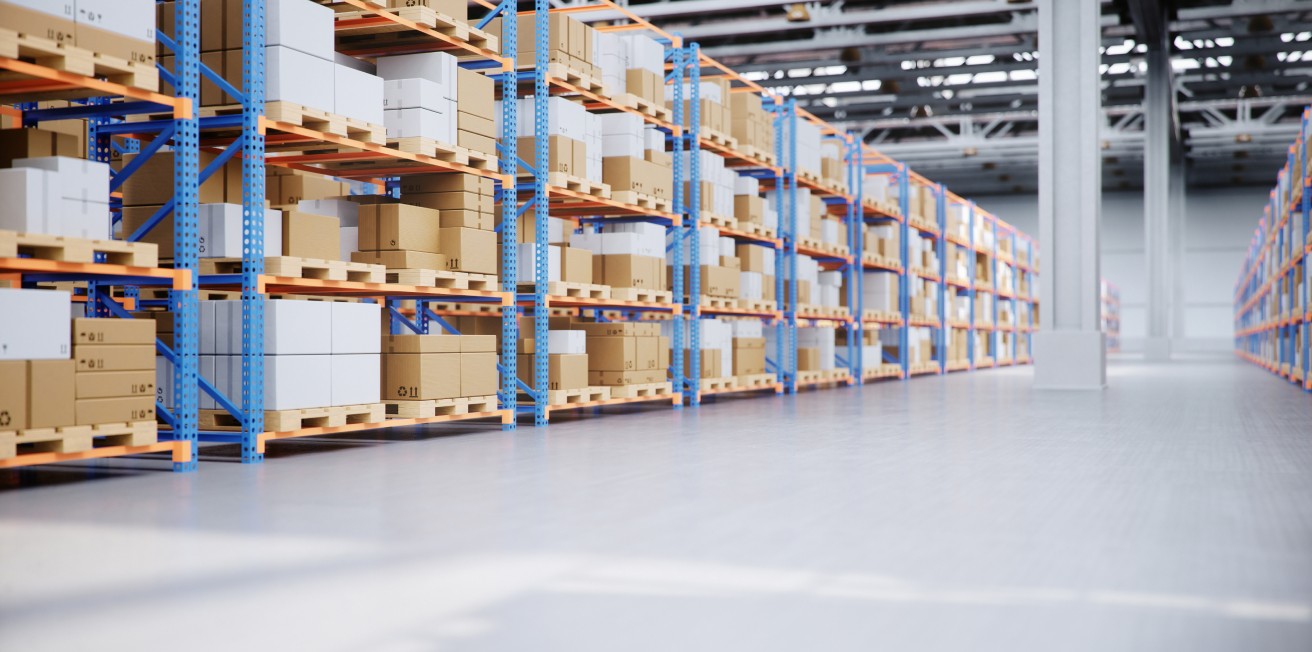
For cross-border logistics for large cargo, the final leg of delivery—often called last-mile—presents the greatest risk of delays and damage. Large items such as sofas, pool tables, or industrial shelving require specialized carriers, lift-gate trucks, and two-person delivery teams. Ordinary parcel carriers lack the equipment or insurance to handle these loads safely.
ANL addresses this gap through six self-operated distribution centers strategically located across the United States, including Los Angeles, Chicago, and New Jersey facilities. Our overweight and oversized cargo service offers 60+ self-operated trucks dedicated to transporting heavy goods. Moreover, any single item up to 3,000 kg and unilateral lengths of 3–5 meters can be handled with our specialized flatbed and step-deck equipment.
Additionally, our warehouses provide 48-hour express pickup after container unstuffing, with complete container dismantling completed within 24 hours and palletizing finished within 36 hours. For e-commerce sellers, this speed translates directly into faster inventory listing activation. For B2B distributors, it means reduced lead times for wholesale buyers. For marketplace sellers, the 7-day free storage period offered by ANL allows flexible coordination between inbound delivery and customer order fulfillment.
Specifically, for large cargo destined for residential addresses or commercial job sites, ANL coordinates white-glove delivery services including inside delivery, assembly, and debris removal. These added services are particularly valuable for furniture and appliance sellers competing on customer experience—a key differentiator on platforms like Wayfair and Home Depot Marketplace.
Conclusion
Mastering cross-border logistics for large cargo requires more than just moving goods from point A to point B. It demands proactive compliance, platform-specific expertise, and a logistics partner that understands the financial impact of every decision—from pallet configuration to tariff payment methods. As an Amazon SPN and FIST carrier, Wayfair and TEMU certified logistics provider, ANL delivers a vertically integrated solution spanning sea freight, air freight, oversized warehousing, and DDP customs clearance.
By leveraging our self-operated truck fleets, 300,000 square feet of U.S. warehouse space, and decade-long experience in large cargo handling, sellers can reduce shipping costs, avoid compliance penalties, and achieve faster platform listing activation. Without a doubt, the complexities of cross-border logistics for large cargo are manageable when you have the right systems and support in place.
Ready to optimize your supply chain for furniture, fitness equipment, or industrial goods? Explore ANL‘s full-container DDP door-to-door service today. Contact our logistics consultants to receive a customized shipping plan that aligns with your 2026 sales targets.
Frequently Asked Questions (FAQ)
1. What is the weight limit for oversized FBA shipments in 2026?Amazon rejects any single package over 150 lbs or exceeding 108 inches in length for fulfillment centers.
2. How can I reduce LTL shipping costs for large furniture items?Consolidate multiple orders into full truckload shipments and use regional carriers specializing in bulk furniture delivery.
3. Does DDP include all US import tariffs and taxes?Yes, DDP covers customs duties, federal excise taxes, state sales taxes, and all clearance documentation fees.
4. What is the average container unstuffing time at US ports in 2026?Professional warehouse operators complete full container unstuffing within 24 hours using dedicated unloading equipment.
5. Can I ship large cargo directly from China to a residential address?Yes, using DDP terms and coordinated white-glove delivery services for inside placement and assembly.
6. How do I obtain a customs bond for large cargo shipments?Your freight forwarder or customs broker can secure a continuous bond covering all annual imports.
7. What is the dimensional weight divisor for US air freight?Most carriers use divisor 6000 (cm³ to kg) or 166 (in³ to lb) for volumetric weight calculation.
8. Are there special labeling rules for large cargo going to Wayfair?Wayfair requires shipment-specific ASN files, unique carton barcodes, and exact SKU matching per ASN line item.