AMERICAN NEW LOGISTICS It is an international logistics comprehensive service provider registered in Los Angeles, California, USA
 Chinese
How to Ensure Safe Transportation of the Entire Energy Storage Cabinet from China to the U.S.?Release time:2026-05-21 views:1224
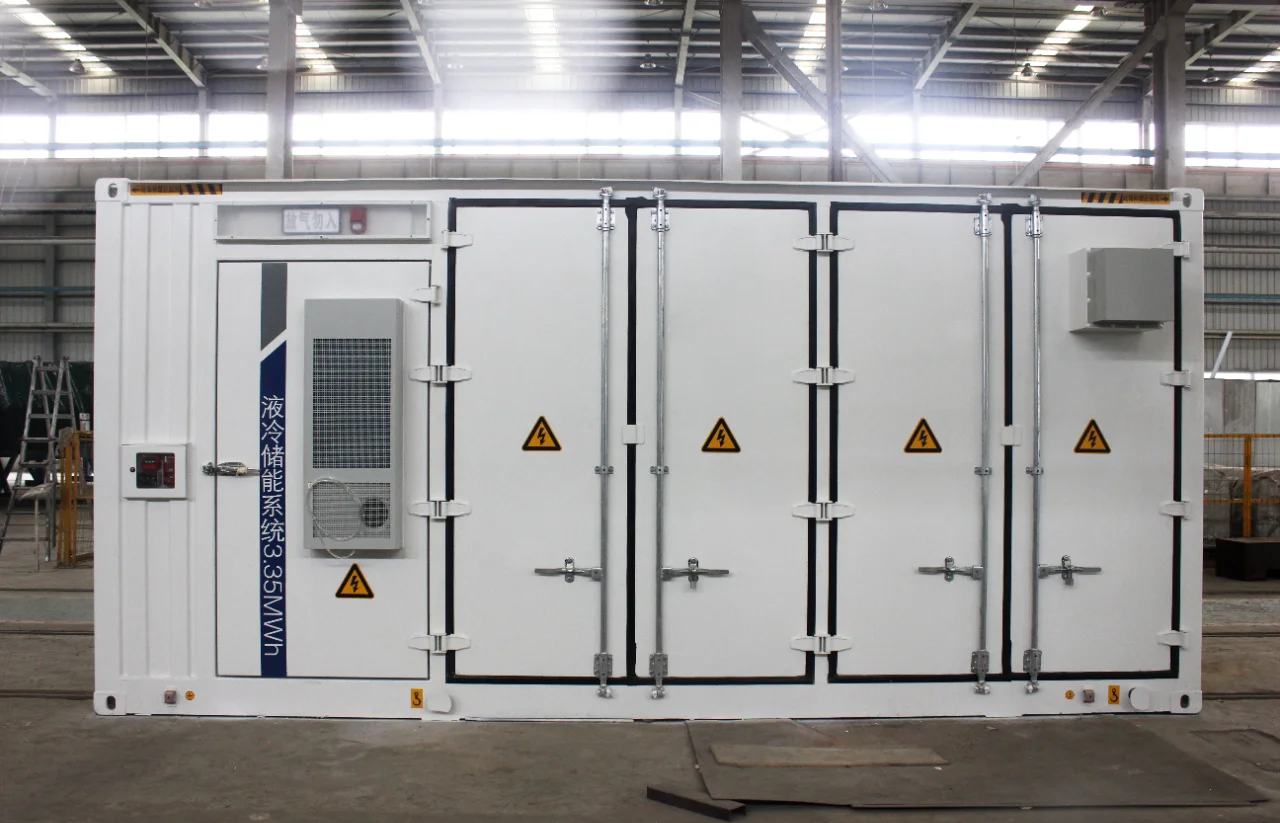
Shipping a complete energy storage cabinet across the Pacific involves more than booking container space. Between lithium battery regulations, oversized dimensions, and strict U.S. customs scrutiny, one oversight can delay your project for weeks. AMERICAN NEW LOGISTICS has developed a proven framework for the transportation of the entire energy storage cabinet that turns regulatory complexity into predictable, on-time delivery.
The energy storage market is accelerating at an unprecedented pace. According to China's General Administration of Customs, inverter exports alone reached $936 million in April 2026, up 17% year-over-year. For the first four months of 2026, cumulative exports hit $3.36 billion, a 35% increase. Energy storage cabinets—integrated systems combining batteries, inverters, and thermal management—represent the fastest-growing segment within this category. However, moving these cabinets demands specialized logistics expertise that ordinary freight forwarders simply do not possess.
Unlike shipping palletized consumer goods, the transportation of the entire energy storage cabinet involves three unique challenges. First, cabinets typically contain lithium iron phosphate (LFP) or NMC battery cells classified as Class 9 dangerous goods under UN3536 (battery energy storage systems contained in equipment) or UN3480. Second, cabinet dimensions often exceed standard container widths, requiring flat racks or specialized oversized handling procedures. Third, each cabinet carries a declared value ranging from $15,000 to $200,000, making insurance and risk mitigation critical.
Without a doubt, most freight forwarders lack the dangerous goods certifications and carrier relationships needed to book vessel space for these integrated systems. Additionally, U.S. Customs and Border Protection (CBP) has increased secondary inspections on lithium battery shipments, with random exam rates rising from 2% to approximately 8% since January 2026. As a result, choosing a logistics partner with direct ACE (Automated Commercial Environment) connectivity and in-house customs brokers becomes a competitive necessity rather than a luxury.
Proper classification determines your duty rate, entry requirements, and regulatory pathway. Under the 2026 Harmonized Tariff Schedule (HTS), a fully enclosed energy storage cabinet with integrated battery management system (BMS) and power conversion system (PCS) typically falls under HTS 8507.60.00.30, carrying a base duty of 3.4%. However, the Section 301 tariff on non-EV lithium batteries increased from 7.5% to 25% effective January 1, 2026. When combined with the base duty and the 7.5% Section 122 IEEPA tariff, the total effective rate reaches approximately 48.4% for Chinese-origin cabinets.
For cabinets that include inverters as separate but co-packed components, classification becomes more complex. In such cases, the primary function rule applies: if the battery component dominates the cabinet's value and function, HTS 8507.60 applies. If the inverter represents the cabinet's core purpose, HTS 8504.40 (inverter duty at 1.5-2.5% base plus Section 301 additions) may be more appropriate. We recommend obtaining a binding ruling from CBP for any new product design to eliminate classification uncertainty.
The following table summarizes the key tariff components for Chinese-origin energy storage cabinets entering the U.S. in 2026.
| Tariff Component | Rate | Applicable HTS | Effective Date |
| Base Duty | 3.4% | 8507.60.00.30 | Ongoing |
| Section 301 (Tier 4) | 25% | 9903.88.68 | Jan 1, 2026 |
| Section 122 (IEEPA) | 7.5% | 9903.01.32 | Feb 4, 2025 |
| Merchandise Processing Fee | 0.3464% (max $675) | 19 CFR 24.23 | Ongoing |

The documentation package for compliant entry must include UN38.3 test reports for all lithium battery cells and modules, Material Safety Data Sheets (MSDS), dangerous goods transport identification reports, and dangerous goods packaging certificates. For cabinets containing inverters, FCC certification for electromagnetic compliance and UL 2743 or UL 1973 (stationary battery systems) certification are also mandatory. Without these documents, customs clearance will simply not occur.
Moreover, the U.S. Consumer Product Safety Commission (CPSC) has recently increased enforcement of lithium battery safety standards. On April 15, 2026, CPSC announced accelerated random sampling of imported battery energy storage systems at major ports. Any cabinet found non-compliant with UL 9540 (energy storage systems and equipment) faces mandatory recall and potential civil penalties. We strongly recommend obtaining third-party testing from ISO 17025-accredited labs before shipping the first container.
For sellers using Amazon FBA or other marketplace fulfillment, additional platform-specific rules apply. Amazon's TIC (Testing, Inspection, Certification) direct verification policy, effective March 10, 2026, requires approved labs to submit test data directly to Amazon. Self-uploaded reports are no longer accepted. As a result, coordinating with both a logistics provider and a TIC-recognized lab is essential for FBA-bound inventory.
For the transportation of the entire energy storage cabinet, ocean freight remains the only practical mode for full-sized systems. A typical 20FT or 40FT container can accommodate one to four cabinets depending on dimensions, with total weights often exceeding 15 metric tons per cabinet. seafreight offers the necessary capacity at acceptable costs, though specialized dangerous goods vessel space must be booked 14-21 days in advance.
Air freight is generally not feasible for whole cabinets due to weight and dimension restrictions. Cargo aircraft can handle pallets up to 125 inches in width, but most energy storage cabinets exceed these limits. Additionally, IATA regulations limit lithium battery state of charge to 30% for air transport, and many manufacturers cannot comply with this requirement without permanent capacity reduction. For urgent spare parts or smaller sub-assemblies, however, airfreight remains an option.
For example, a project requiring a replacement battery module to restore an operational system might justify air freight costs of $12-$18 per kilogram. For a 200kg module, this equates to $2,400-$3,600, which is often acceptable compared to project downtime losses. Nonetheless, for routine inventory replenishment, ocean freight in dedicated dangerous goods containers delivers the best total cost of ownership.
Yes, and for many first-time exporters, DDP is the most practical solution. Under DDP terms, the logistics provider acts as the Importer of Record (IOR), using their annual continuous bond and customs relationships to achieve predictable clearance outcomes. This eliminates the need for the seller to establish a U.S. legal entity simply to receive their own goods. The all-inclusive pricing structure (covering freight, duties, fees, and final delivery) also simplifies budgeting and removes surprises.
However, performing DDP correctly for energy storage cabinets requires specialized capabilities. The logistics partner must maintain an active continuous bond ($50,000 minimum), have direct ACE filing access, and employ certified customs brokers with lithium battery experience. Without these elements, DDP becomes a liability. At ANL, we have handled hundreds of DDP dangerous goods shipments, including complete cabinet exports, with a 99.7% first-pass clearance rate.
Real-World Case: 40FT Flat Rack - Ningbo to Seattle (February 2026)
A renewable energy developer needed to ship three oversized energy storage cabinets from Ningbo, China to a microgrid project site in Seattle, Washington. Each cabinet measured 96"L x 48"W x 88"H and weighed 8,500 kg. The combined shipment occupied a 40FT flat rack container with additional over-height stowage. The shipment contained NMC battery cells, requiring UN3480 classification with on-deck stowage and fire suppression monitoring.
The logistics solution included pre-booking dangerous goods space on a COSCO vessel, arranging flat rack equipment, and securing a power-only chassis for the final 40-mile drayage from Seattle port to the project site. Customs clearance utilized a continuous bond with advance filing of entry documents 72 hours before arrival. Total transit time from pickup in Ningbo to final delivery in Seattle was 28 days. Total landed cost, including all freight, duties, and fees, came to $18,750 for the three cabinets. No inspections or delays occurred.
Last-mile delivery presents distinct challenges not encountered with standard freight. Many residential and commercial project sites lack loading docks, requiring liftgate-equipped trucks. Cabinets exceeding 1,000 kg may require specialized hydraulic tailgates or small cranes for offloading. Additionally, delivery appointments often require coordination with site supervisors, electricians, and sometimes local permitting authorities.
Using a logistics partner with dedicated fleet assets can mitigate these risks. For instance, maintaining a fleet of self-operated trucks with flatbed and liftgate capabilities enables direct control over delivery quality and scheduling. When combined with strategic warehouse locations near major ports, the result is faster turn times and lower costs. Indeed, container destuffing within 24 hours of port arrival, followed by outbound preparation within 48 hours, significantly reduces warehousing costs and accelerates final delivery.
For DDP shipments, the last-mile phase also requires coordination with the consignee to confirm delivery windows, access requirements, and any special unloading instructions. We always conduct a pre-delivery call to verify that the site can accept the cabinet's dimensions and weight. Without this step, a "no access" situation can result in costly return-to-depot fees. warehouse partners with cross-docking capabilities add another layer of flexibility for complex delivery schedules.
Three major compliance updates took effect in 2026 that directly impact the transportation of the entire energy storage cabinet. First, the Section 301 tariff increase on non-EV lithium batteries from 7.5% to 25% (effective January 1, 2026) significantly raised landed costs for Chinese-origin cabinets. Second, the TIC direct verification mandate for Amazon FBA (effective March 10, 2026) eliminated self-uploaded lab reports, requiring direct submission from approved testing bodies. Third, CPSC's accelerated random sampling program (announced April 15, 2026) increased the probability of secondary inspections for battery energy storage systems.
To adapt to these changes, shippers should take the following actions:
1. Review all product certifications to ensure they originate from ISO 17025-accredited, Amazon-approved TIC labs if selling on FBA.
2. Update landed cost models to reflect the 48.4% effective tariff rate for Chinese-origin cabinets.
3. Build 5-7 days of buffer into supply chain timelines to accommodate potential CPSC sampling holds.
4. Consider intermediate assembly in Mexico or Vietnam to qualify for USMCA duty preferences, though such strategies require 6-12 months to implement fully.
Without a doubt, the regulatory environment for energy storage imports has become more demanding. However, shippers who partner with specialized logistics providers can navigate these changes successfully while competitors struggle.
A commercial energy storage manufacturer needed to ship a single 20FT container containing two integrated energy storage cabinets from Shanghai to a data center project in Dallas, Texas. Each cabinet measured 78"L x 36"W x 72"H and weighed 6,200 kg. The shipment contained LFP batteries classified under UN3536 (battery energy storage systems contained in equipment), which carries less restrictive packaging requirements than UN3480.
The primary challenge involved the inland leg from the Port of Houston (the discharge port) to Dallas, a distance of approximately 260 miles. Using a dedicated flatbed carrier with a hydraulic liftgate, the logistics provider coordinated a direct delivery appointment with the data center's loading dock. Customs clearance used an existing annual bond, with entry filed 48 hours before vessel arrival. Total transit time from Shanghai pickup to Dallas delivery was 24 days. Total freight cost, inclusive of all fees but excluding duties, was $6,850 for the container. The shipment cleared without examination and was offloaded in under two hours.
The transportation of the entire energy storage cabinet requires specialized knowledge of lithium battery regulations, tariff classification, dangerous goods carrier bookings, and last-mile logistics for oversized cargo. With effective tariff rates reaching 48.4% for Chinese-origin cabinets and CPSC enforcement increasing, partnering with an experienced logistics provider is no longer optional. AMERICAN NEW LOGISTICS offers end-to-end DDP solutions tailored specifically for energy storage systems, including customs clearance, oversized handling, and final delivery.
Ready to move your energy storage cabinets to the U.S. market with confidence? Contact us today for a compliance-focused shipping quote tailored to your product specifications and timeline. Our team will walk you through every document, every tariff line, and every mile of the journey.
Q1: What is the maximum number of energy storage cabinets in one 40FT container?
Typically 4-6 cabinets, depending on dimensions and required separation distance for dangerous goods segregation.
Q2: Do I need separate UN38.3 reports for each battery cell within a cabinet?
Yes. The report must cover the specific cell model and capacity; generic reports often trigger customs holds.
Q3: Can I ship an energy storage cabinet with batteries pre-installed via ocean freight?
Yes, under UN3536 classification, provided the batteries are fully contained within the equipment and properly secured.
Q4: What is the typical cost difference between DDP and EXW for a cabinet shipment?
DDP typically adds $5,000-$12,000 per container depending on duty exposure and inland distance.
Q5: How far in advance should I book dangerous goods vessel space?
At least 21 days before your cargo ready date; space on lithium-approved vessels is increasingly tight.
Q6: Does UL 9540 certification apply to all energy storage cabinet imports?
Not mandatory for all entries, but CPSC and many building codes now require UL 9540 for stationary systems.
Q7: Can I consolidate multiple smaller cabinets into one LCL shipment?
Yes, though LCL for dangerous goods requires specialized consolidators and often costs more than FCL.
Q8: What happens if my cabinet arrives without proper FCC certification?
CBP may issue a notice of non-compliance, requiring re-export or destruction of the entire shipment.
Hot News