AMERICAN NEW LOGISTICS It is an international logistics comprehensive service provider registered in Los Angeles, California, USA
 Chinese
Shipping to the United States by Sea: Transpacific Freight SolutionsRelease time:2026-06-16 views:980
Shipping to the United States by sea involves a highly regulated multi-modal pipeline divided into three distinct operational phases: origin consolidation and maritime carriage, U.S. customs clearance, and terminal drayage distribution. Shipments move via either FCL (Full Container Load) or LCL (Less than Container Load) structures across major ocean alliances (2M, Ocean Alliance, THE Alliance) or independent express loops like Matson. Successful execution requires rigid adherence to Federal Maritime Commission (FMC) tariff filings, U.S. Customs and Border Protection (CBP) ISF 10+2 mandates, and strategic port selection based on inland rail or local distribution requirements.
Navigating the complex waters of transpacific maritime logistics demands more than just booking a slot on a vessel. For cross-border brands, enterprise manufacturers, and procurement teams, executing a predictable strategy for seafreight transportation dictates your entire supply chain velocity. Managing this movement requires a granular look at the regulatory, physical, and contractual realities that govern cargo flow from Asian factory floors to American loading docks.
The foundational decision in containerized logistics hinges on volume optimization. FCL (Full Container Load) implies that a single shipper utilizes the entire volumetric or weight capacity of a standard 20ft, 40ft, or 45ft High Cube container. LCL (Less than Container Load) pools multiple shippers' cargo into a single container at an origin container freight station (CFS).
FCL offers superior security and velocity because the container is sealed at the factory and stays intact until destination stripping. Conversely, LCL introduces a secondary handling risk profile due to the physical sorting, stacking, and consolidation steps at origin, alongside corresponding de-consolidation delays at destination warehouses. Shippers must analyze break-even points; typically, when an LCL shipment exceeds 15 cubic meters (CBM), booking a dedicated 20ft FCL container becomes more cost-effective despite unutilized space, simply by eliminating destination handling surcharges.
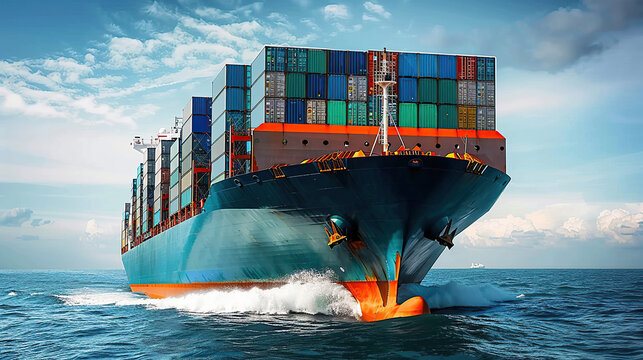
Maritime transit time is determined by port-pair geography, vessel routing loops, and terminal operational efficiency. The United States is structurally split into the USWC (U.S. West Coast), USEC (U.S. East Coast), and USGC (U.S. Gulf Coast).
USWC ports like the Los Angeles Port and Long Beach Port offer the shortest water transit times from Asia, generally ranging from 12 to 16 days on standard strings, and as low as 11 days on premium independent services like Matson. However, if your final destination lies in the Midwest or East Coast, routing via USWC requires entering an inland intermodal rail network (IPI - Interior Point Intermodal), which introduces potential rail car shortages and rail ramp container dwell delays. Direct USEC routing via the Panama or Suez Canal to ports like New York/New Jersey takes 28 to 35 days but avoids domestic rail dependency.
| Port Pair (Origin to US) | Service Type | Port-to-Port Transit | Total Door Delivery |
|---|---|---|---|
| Yantian to Los Angeles | Premium Express | 11-13 Days | 16-19 Days |
| Shanghai to Long Beach | Standard Ocean | 14-16 Days | 22-26 Days |
| Ningbo to New York | All-Water USEC | 28-32 Days | 35-40 Days |
U.S. customs entry is a rigorous legal framework. The most critical compliance step when shipping to the United States by sea is the Importer Security Filing (ISF), commonly known as ISF 10+2. This electronic filing must be accurately submitted to U.S. Customs and Border Protection (CBP) at least 24 hours before the vessel departs the final foreign port of loading.
Failure to file, or late submission of the ISF, triggers an automatic $5,000 liquidated damages penalty per violation directly from CBP. Furthermore, to legally execute a customs entry, the Importer of Record (IOR) must secure a valid customs bond—either a Single Entry Bond or a Continuous Bond. For volume shippers, a Continuous Bond is necessary as it covers all import entries across any U.S. port within a 12-month validation cycle.
ANL's Transpacific Cost Optimization Decision Tree
To maximize efficiency and protect gross margins, logistics teams should audit their cargo physical specs against destination routing thresholds before selecting a maritime asset class.
Your Harmonized Tariff Schedule (HTS) code dictates both the baseline customs duty rate and whether your goods trigger Partner Government Agency (PGA) regulations. When executing customs clearance, mistakes in HTS classification can lead to charges of customs fraud or evasion.
Furthermore, categories like consumer electronics often require an Federal Communications Commission (FCC) identifier or declaration. Medical items or food-contact goods require Food and Drug Administration (FDA) registration, while specialized equipment may mandate Environmental Protection Agency (EPA) or Department of Transportation (DOT) clearances. If your documentation lacks appropriate PGA approvals when the carrier sends the manifest data, CBP will issue a customs hold, stopping your container at the port terminal.
The ocean voyage ends at the terminal quay, but the inland delivery phase presents significant logistics challenges. Port drayage refers to the short-haul trucking process of moving an ocean container from the marine terminal to a local cross-dock, transload facility, or final warehouse.
This stage requires coordination across ocean terminals, steamship lines, and truck chassis pools. Marine terminals provide limited "free time" (typically 4 to 5 days) for container storage. If a drayage carrier fails to secure a terminal pickup appointment before free time expires, the shipper is hit with steep demurrage fees. Similarly, once the container leaves the port, it must be stripped and returned to an authorized empty depot within a set number of days to avoid carrier detention charges.
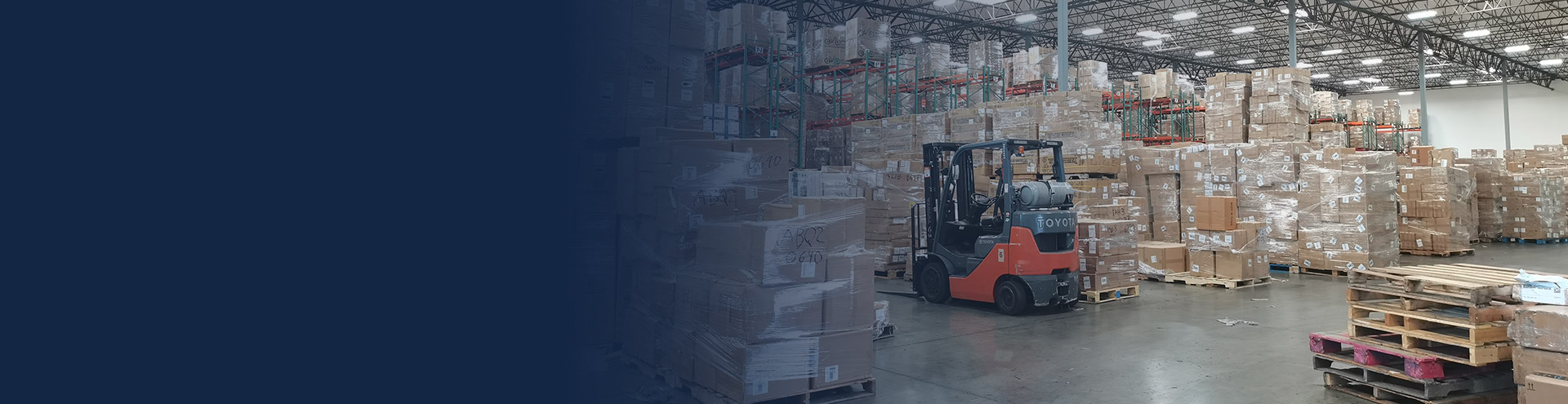
In October 2025, our team managed an urgent multi-container supply chain deployment involving high-value smart electronics equipped with lithium-ion power packs. The cargo was moving under a strict contract schedule bound for an East Coast distribution hub. The original booking agent had failed to properly link the supplier's FCC conformity certificates within the Automated Commercial Environment (ACE) portal prior to vessel arrival at the Long Beach Port.
This omission triggered an immediate CBP intensive examination hold, and the container was transferred to a Centralized Examination Station (CES). Recognizing that standard terminal free-time metrics were running out, we deployed our local Southern California cabinet drayage team to secure specialized tridem chassis assets while our in-house customs brokerage staff filed an expedited prior-disclosure amendment with the port inspectors. By presenting the validated FCC technical filings directly to the processing officers, we secured a conditional cargo release within 48 hours, neutralizing over $4,500 in potential storage fees. We then trucked the containers to our near-port warehouse for rapid transloading into domestic dry vans, hitting the client’s delivery window with zero retail chargebacks.
| Risk Event | Root Operational Cause | ANL Proactive Mitigation Strategy |
|---|---|---|
| Port Demurrage Charges | Missed terminal pickup appointments due to chassis scarcity. | Pre-allocation of private asset-chassis fleets 48 hours pre-vessel arrival. |
| ISF Late Filing Penalties | Origin supplier document delays past the 24-hour pre-sail limit. | Automated ERP locks blocking container loading until ISF match confirmation. |
| Amazon/Wayfair Rejection | Pallet height non-compliance or broken carrier appointment windows. | Near-port transloading and deployment of Amazon SPN carrier fleets. |
Ocean freight spend goes far beyond the baseline ocean carrier port-to-port rate. Shippers must analyze the comprehensive cost of door-to-door transportation.
Ancillary fees can quickly inflate a budget. Shippers must track origin local charges (e.g., THC, export customs clearance, documentation fees), destination terminal surcharges (e.g., Clean Truck Fee, PierPass, chassis rental fees), and final-mile fuel surcharges. Opting for a Delivered Duty Paid (DDP) or Delivered At Place (DAP) framework requires a logistics partner with clear, line-item pricing visibility, protecting your margins against unexpected destination invoices.
The weakness of many digital freight forwarders is their complete lack of physical assets in destination markets. When port disruption or chassis shortages occur, non-asset brokers are forced to compete for third-party truck capacity on spot boards, causing costs to surge.
Working with an asset-backed partner that directly owns or controls its truck fleet and warehouse space fundamentally shifts the balance of power. Having dedicated yards near terminals in Los Angeles, Long Beach, and New York ensures immediate container drayage capabilities. Furthermore, direct integration with automated warehouse management systems (WMS) allows for swift transloading, enabling shippers to route goods to Amazon FBA, Walmart, or Wayfair without relying on unstable third-party networks.
Executing a successful ocean freight program requires a careful balance of physical asset coordination and strict regulatory compliance. Shippers who proactively manage their HTS classifications, ensure timely ISF filings, and select partners with local destination assets can insulate their supply chains from costly port delays and fines. Building a resilient transpacific logistics network requires continuous oversight, compliance expertise, and a physical infrastructure capable of handling disruptions.
Concerned about Transpacific CBP Holds or Port Demurrage?
Request an end-to-end supply chain risk and regulatory compliance review with our West Coast maritime operations team.
Q: What is the hard deadline for submitting ISF 10+2 data to CBP?
The data manifest must be submitted at least 24 hours prior to the container being loaded onto the vessel at origin.
Q: How can I prevent terminal demurrage fees if the port faces a chassis shortage?
Partner with an asset-backed provider utilizing private chassis fleets, bypassing public chassis pool dependency during peak volume constraints.
Q: What marks the difference between a single entry bond and a continuous bond?
A single bond covers one import transaction; a continuous bond covers all entries across any U.S. port for 12 months.
Q: When does LCL volume become expensive compared to booking a full 20ft container?
When cargo cross-docking calculations exceed 15 CBM, destination stripping charges usually outpace baseline FCL fixed pricing models.
Q: Can Amazon FBA shipments be delivered directly by any ocean carrier?
No, final delivery requires an authorized carrier with direct integration into Amazon's Carrier Central system to secure delivery appointments.
Hot News